Advancing Sustainable CO₂ Utilisation through High-Pressure Carboxylation of Biomass-Derived Phenolics
Research Highlight featuring the work of Omar Mohammad, Aston University
Editor’s Note
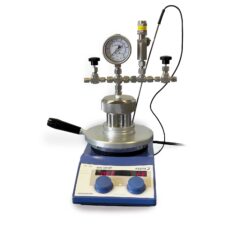
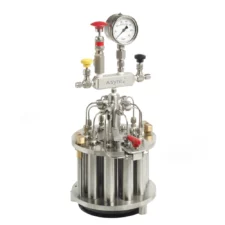
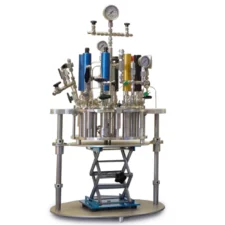
At Asynt, we believe scientific equipment should enable discovery rather than become the focus of it. This inaugural edition of Asynt Research Highlights celebrates the work of Omar Mohammad and colleagues at Aston University, who systematically modernised the classical Kolbe–Schmitt reaction for contemporary carbon utilisation research. Throughout the programme, the Asynt Quadracell® served as an enabling platform for reproducible parallel high-pressure experimentation while the science remained the centre of attention.
Executive Summary
Carbon dioxide is increasingly recognised as a renewable carbon feedstock, yet its chemical activation remains challenging. Across multiple publications and a doctoral thesis, Omar Mohammad developed suspension-based approaches to the Kolbe–Schmitt reaction, extending aromatic carboxylation from simple phenol to representative biomass-derived phenolics. This review brings those studies together into a single narrative, illustrating how systematic optimisation, reaction engineering and parallel experimentation collectively advanced sustainable aromatic chemistry.
Why Carbon Dioxide Utilisation Matters
Carbon Capture and Utilisation seeks not only to capture carbon dioxide but to transform it into commercially valuable products. Hydroxybenzoic acids already occupy established markets in pharmaceuticals, polymers, preservatives and speciality chemicals, making improved routes to their manufacture highly relevant. The work reviewed here demonstrates that meaningful sustainability gains can arise through improving proven industrial chemistry rather than replacing it.
The Science Behind the Kolbe-Schmitt Reaction
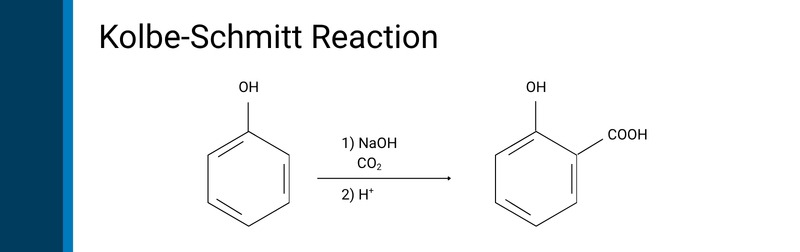
The Kolbe–Schmitt reaction remains one of the few industrially proven methods for directly incorporating carbon dioxide into aromatic compounds. Conventional gas–solid implementations, however, suffer from diffusion and mass-transfer limitations and are not ideally suited to substituted biomass-derived phenolics. The Aston research programme asked a practical question: could established chemistry be modernised through improved reaction engineering rather than entirely new chemistry?
Carbon Dioxide: An Attractive but Challenging Feedstock
Although abundant and inexpensive, carbon dioxide is thermodynamically stable and kinetically unreactive. The Aston programme focused on improving one of the few established aromatic carboxylation reactions, demonstrating that optimisation of reaction conditions and physical reaction environment can significantly improve practical carbon utilisation.
Why Biomass-Derived Phenolics?
Lignin represents the largest renewable source of aromatic carbon on Earth. Model compounds including guaiacol, catechol and syringol provide representative substrates for developing future lignin valorisation technologies. By extending aromatic carboxylation beyond phenol, the programme moved carbon dioxide utilisation closer to realistic biorefinery applications.
Research Strategy
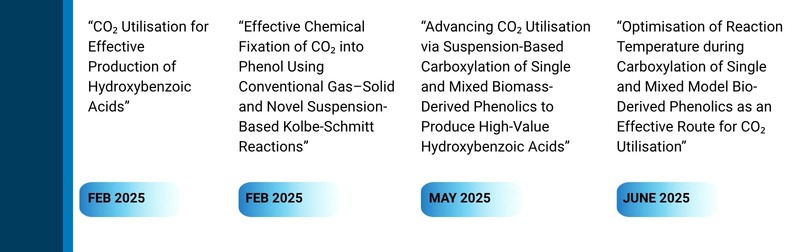
The programme progressed through four connected stages: establishing baseline gas–solid chemistry, developing suspension-based methodologies, extending the chemistry to biomass-derived phenolics and finally investigating mixed feedstocks representative of industrial lignin streams. Collectively, these studies form a coherent programme of incremental innovation.
From Classical Chemistry to Modern Carbon Utilisation
Each publication answered questions raised by the previous study. Baseline experiments established reproducible operating conditions before suspension methodologies addressed mass-transfer limitations. The methodology was then extended to increasingly challenging renewable substrates before mixed feedstocks demonstrated greater industrial relevance.
Parallel Experimentation as an Enabling Technology
Systematic optimisation required investigation of temperature, pressure, reaction time and substrate identity. The Asynt Quadracell® four-position high-pressure reactor enabled multiple experiments to be performed simultaneously under identical operating conditions, improving efficiency and confidence in comparative datasets while remaining an enabling technology rather than the subject of the research.
Beyond Individual Papers
The greatest contribution of this work is not a single experimental result but a roadmap for modernising established industrial chemistry. Rather than seeking novelty for its own sake, the programme demonstrates how thoughtful engineering and incremental optimisation can substantially expand the relevance of mature chemical processes.
Carbon Capture Is Only Half the Story
Captured carbon dioxide must ultimately become a useful raw material. Aromatic carboxylation provides one practical route because the products already possess established industrial markets. Improving their synthesis therefore offers immediate opportunities for sustainable manufacturing.
Lignin: The Untapped Opportunity
By investigating lignin-derived phenolics, the programme linked renewable feedstocks with carbon utilisation, illustrating how future biorefineries might convert abundant aromatic biomass into valuable hydroxybenzoic acids.
Broader Lessons
The work highlights four recurring themes: established chemistry remains fertile ground for innovation; reaction engineering deserves equal recognition alongside catalysis; sustainable chemistry requires realistic feedstocks; and cumulative incremental improvements often outweigh isolated breakthroughs.
Research Impact
The programme advanced carbon utilisation, modernised classical chemistry, supported renewable feedstocks and demonstrated the value of systematic parallel optimisation. Together these contributions extend beyond aromatic carboxylation into broader reaction engineering and sustainable process development.
Looking Ahead
Future opportunities include more complex lignin streams, continuous processing, catalyst development and integration of automated experimentation with digital optimisation tools. The research establishes a strong foundation upon which future carbon utilisation technologies can build.
Concluding Remarks
Beginning with conventional aromatic carboxylation and progressing towards realistic biomass-derived systems, Omar Mohammad and colleagues demonstrated how established industrial chemistry can be adapted for the demands of a circular carbon economy. The work illustrates that sustainable innovation frequently emerges through disciplined optimisation rather than dramatic reinvention.
If you’d like to discuss how the Quadracell or one of Asynt’s alternative laboratory pressure reactor systems would support your chemistry, our technical team would be pleased to hear from you. Please contact us.
Core References
- Mohammad, O. CO₂ Utilisation for Effective Production of Hydroxybenzoic Acids. Ph.D. Thesis, Aston University, Birmingham, UK, 2025.
- Mohammad, O.; Onwudili, J. A.; Yuan, Q.; Evans, R. Effective Chemical Fixation of CO₂ into Phenol Using Conventional Gas–Solid and Novel Suspension-Based Kolbe–Schmitt Reactions. ChemSusChem 2025, 18 (12), e202402564. https://doi.org/10.1002/cssc.202402564.
- Mohammad, O.; Onwudili, J. A.; Yuan, Q.; Evans, R. Optimisation of Reaction Temperature during Carboxylation of Single and Mixed Model Bio-Derived Phenolics as an Effective Route for CO₂ Utilisation. Carbon Capture Science & Technology 2025, 15, 100442. https://doi.org/10.1016/j.ccst.2025.100442.
- Mohammad, O.; Onwudili, J. A.; Yuan, Q.; Evans, R. Advancing CO₂ Utilisation via Suspension-Based Carboxylation of Single and Mixed Biomass-Derived Phenolics to Produce High-Value Hydroxybenzoic Acids. Chemical Engineering Journal 2025, 515, 163498. https://doi.org/10.1016/j.cej.2025.163498.