Numerous variables play a key role in photochemical reactions: wavelength, light intensity, time, temperature, stoichiometry and more. Often even small variations can result in very different results, and being able to test different parameters allows for reaction optimisation. This is one of the key reasons Asynt has developed a wide range of photochemical reactors designed for this kind of high-throughput screening.
Our photoreactors fall into two key categories: batch and flow.
Batch:
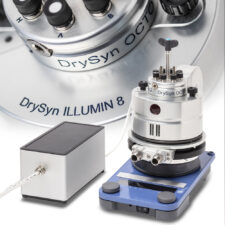
• Illumin8 – The Illumin8 batch photoreactors allow for up to 8 reactions to be run in parallel. They are situated within one of our Octo units. The Octo allows for parallel inert reactions, with sampling and additions via septa.

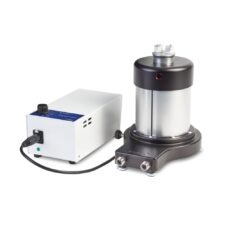
• Solstice – Like the Illumin8, the Solstice features an array of reaction vials. These are larger than the Illumin8’s and surround a more powerful LED array (up to 180 W). These vials can be individually inerted and feature septa for sampling and additions.

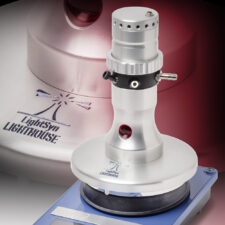
• Lighthouse – The Lighthouse features two configurations: single and triple position. In order to maximise irradiance, it features a quartz rod to channel light directly from its LED into the reaction. The triple-position Lighthouse allows you to screen up to three wavelengths simultaneously on a single magnetic stirrer hotplate (or cooling base).
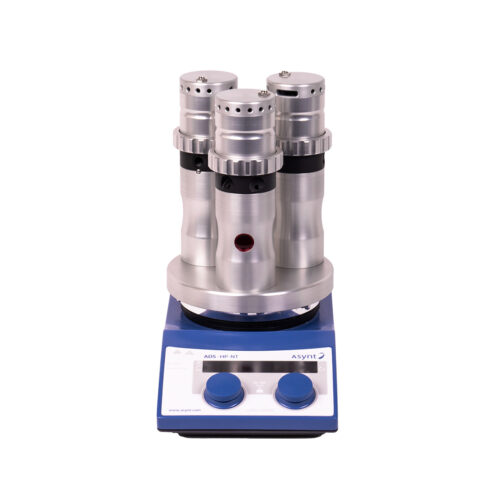
All the above products feature options for magnetic stirring, heating via hotplate, or precise temperature control via a circulator.
Flow:
Capillary photoreactors allow you to change the parameters of your reaction with continuous flow. This can be achieved by altering stoichiometry (via a segmented flow technique), temperature, irradiance and residence time.
• Borealis – The Borealis is a coil reactor surrounding a 120 or 180 W LED array. It fits on a temperature-controlled base for precise heating and cooling.
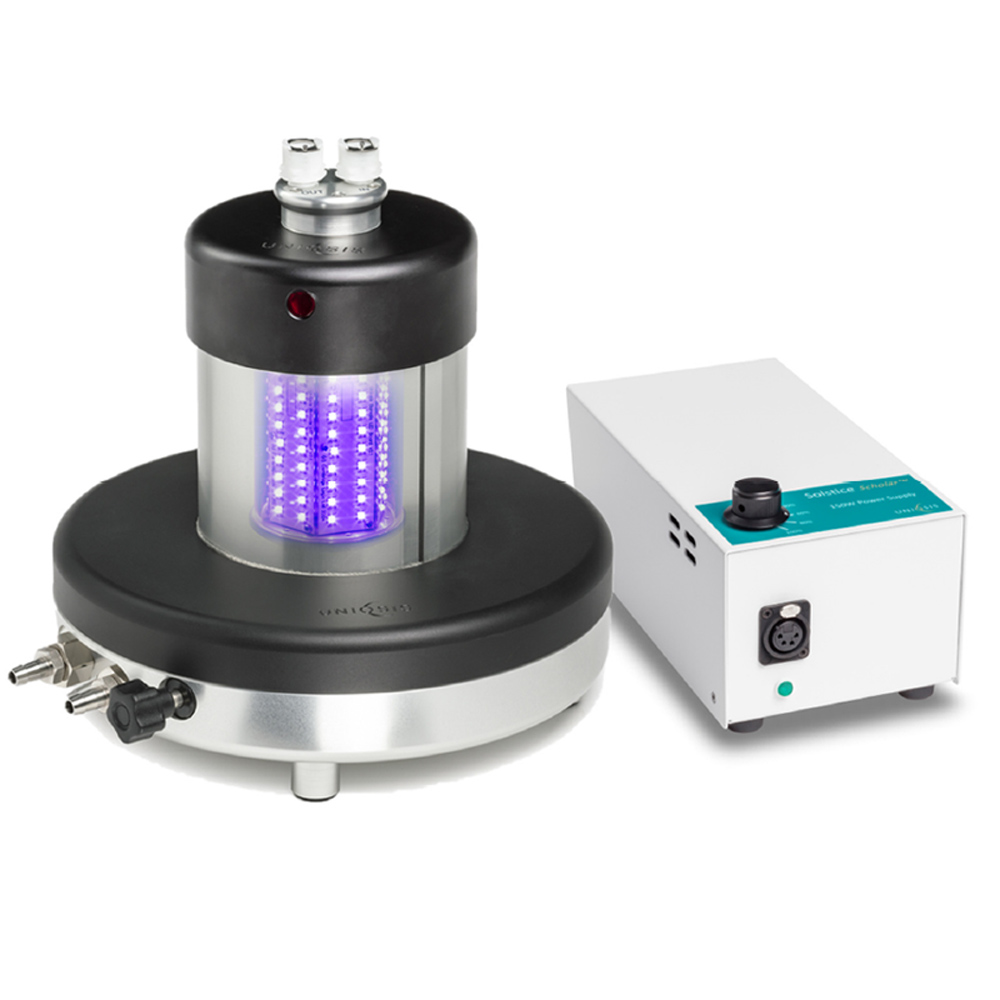
• PhotoSyn – The PhotoSyn has a similar coil and temperature control column to the Borealis, but it has far more powerful LEDs (up to 700 W). Due to the size of the array, it sits around the coil rather than inside it. Both the PhotoSyn and Borealis LEDs are water cooled.

• PhotoChip (with tube-in-plate reactor) – The PhotoChip features a tube-in-plate reactor or glass static mixer (GSM) in a temperature-controlled base, situated directly under a 180 W LED array. This allows for excellent temperature control and irradiance. The GSM cannot be used for segmented flow as it breaks the partitions, but a tube-in-plate reactor is ideal for screening.

A Tube-in-Plate reactor from the PhotoChip
Conclusion:
Asynt has a wide range of tools for screening photochemical reactions, with both flow and batch photoreactors. These cover a selection of scales and applications in a user-friendly, safe and precise manner.
If you’d like to know more about any of these laboratory tools or would like to discuss which one may be best for your particular research, please don’t hesitate to get in touch. You can email us via [email protected], call us on 01638 781709, or send us a message using the live chat in the bottom right-hand corner. We look forward to hearing from you!