The Best Photoreactors for Screening Photochemical Reactions
Numerous variables play a key role in photochemical reactions: wavelength, light intensity, time, temperature, stoichiometry and more.

Asynt brings flexible, parallel photochemistry to a platform already trusted for precise reaction control.
Asynt Chemistry Newsletter December 2025 Overview: Wrapping Up the Year with Innovation and Value As we approach the end of 2025, it’s the perfect time to reflect on an incredible
Photochemistry has consistently grown as a field of research across the last couple of decades, opening new avenues of synthetic catalysis. Asynt are keen to support chemists in this expanding area of research by providing precise photochemical tools, but why not just make your own?
Chemical reactions are generally activated by heat or chemical reagents. Recent developments in laboratory equipment have allowed lesser methods to become more accessible: methods such as electrochemistry and photochemistry. Photoreactors use light as a catalyst allowing for reagentless (also known as traceless) chemistry.
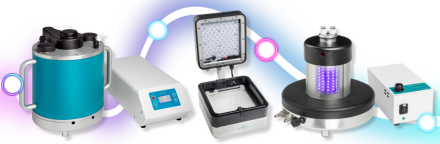
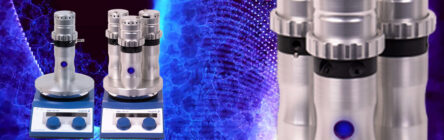
Asynt’s innovative LED photochemistry tools differ from others in several significant ways – find out why they’re ideal!
Asynt have teamed up with Sygnature Discovery, and Liverpool ChiroChem (LCC), to showcase their Illumin8 parallel photoreactor.
We discuss the key principles of good photoreactor design, encompassing the diverse needs of researchers and industry
How to design an LED photoreactor that works for everyone? We have the answer – modularity.
Asynt introduce the Lighthouse – a new photochemical reactor system in their LightSyn range, developed in response to customer demand for higher reaction yields, ease of use, high operational safety, and