Scaling Up Overhead Stirring

Posted on: January 9, 2026

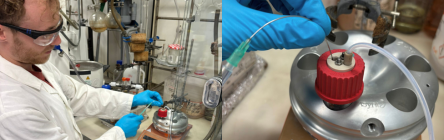
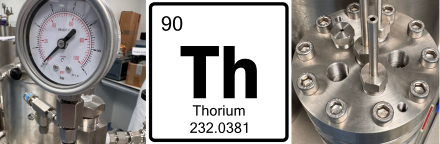
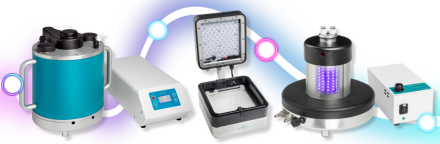
By using overhead stirring across the scale up processes, researchers can gain a better understanding of how their chemistry will scale than if they switched methods as they increased volume, all while avoids many of the draw backs that come with magnetic stirring.
Tools for Improving your Sustainable Chemistry

Posted on: December 22, 2025

One of the best definitions of sustainable chemistry are the 12 principles of green chemistry. Here’s how Asynt’s product range can help improve these in your lab

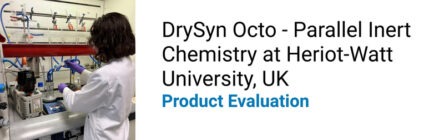
Parallel inert chemistry - review of the DrySyn Octo by the Donnelly Lab at Heriot-Watt University, UK

DrySyn Octo Evaluation: Heriot-Watt University – Parallel Inert Chemistry

Posted on: December 19, 2025

The Donnelly Lab is a young, dynamic, and growing research group within the Institute of Chemical Sciences at Heriot-Watt University. Their research is driven by expertise in catalysis, organic synthesis, and polymer chemistry. Here’s their feedback on the DrySyn Octo.

Overhead Stirring for Reaction Vials

Posted on: December 9, 2025

The DrySyn MiniSpin was designed to allow for powerful overhead stirring of reaction vials. You can run up to three MiniSpins on a single hotplate allowing for a total of twelve reactions in parallel.

Why Choose a Commercial Photoreactor over Building Your Own?

Posted on: October 28, 2025

Photochemistry has consistently grown as a field of research across the last couple of decades, opening new avenues of synthetic catalysis. Asynt are keen to support chemists in this expanding area of research by providing precise photochemical tools, but why not just make your own?

batch chemistry vs flow chemistry

Benefits of Flow Chemistry vs Benefits of Batch Chemistry

Posted on: September 29, 2025

Batch and flow represent two crucial, but disparate, chemical processes. Each has its own set of benefits depending on the requirements of your laboratory. In this blog I’ll run through some of the differences between them, and advantages of each, and highlight some of their shared strengths.

Molten Salt Reactor Design

What makes an effective molten salt reactor design?

Posted on: July 9, 2025

A molten salt reactor (MSR) is a nuclear reactor that uses molten salt as the primary reactor coolant. The coolant is either mixed with the molten fissile salt or surrounds the fuel rods

flow photochemistry banner

The Benefits of a Flow Photoreactor

Posted on: June 16, 2025

Chemical reactions are generally activated by heat or chemical reagents. Recent developments in laboratory equipment have allowed lesser methods to become more accessible: methods such as electrochemistry and photochemistry.  Photoreactors use light as a catalyst allowing for reagentless (also known as traceless) chemistry.