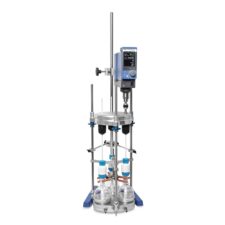
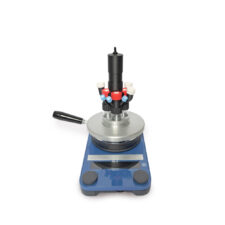
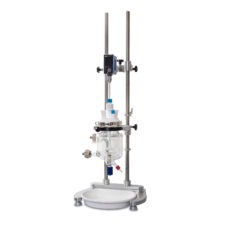
Overhead stirring is key to a range of chemistry processes. Many of these processes are developed for the purpose of scaling up. By using overhead stirring across the scale-up processes, researchers can gain a better understanding of how their chemistry will scale than if they switched methods as they increased volume, all while avoiding the drawbacks that come with magnetic stirring.
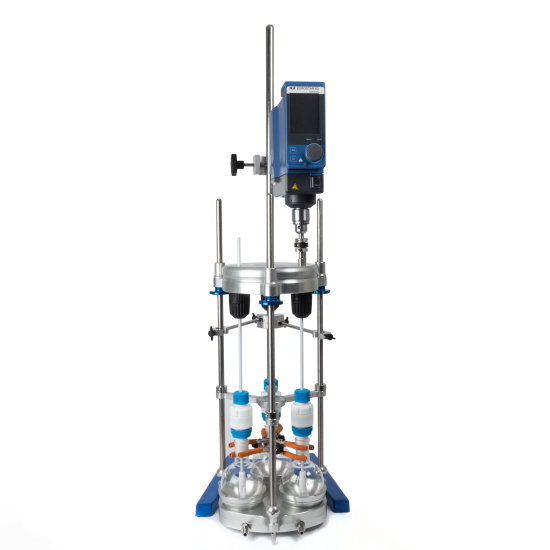
Why Overhead Stirring?
Overhead stirring has a range of benefits. Firstly, it is significantly more powerful than magnetic stirring, producing a much higher level of torque. This allows overhead stirring to be used with more viscous reactants. A second benefit is that overhead stirring avoids the grinding effects of magnetic stirring. This makes it ideal for working with solids.
Generally, the larger the volume of your reaction, the more overhead stirring becomes preferable to magnetic stirring. That being said, overhead stirring is best suited to smaller scale reactions when it comes to viscous chemistry and solid-state reactions. For example, reactions within vials and round-bottom flasks.
Overhead stirring also grants access to a wide range of impeller geometries, as well as adjustable stirrer positioning, or even having multiple impellers on a single shaft. This provides greater versatility than magnetic stirring.
Different Scales:
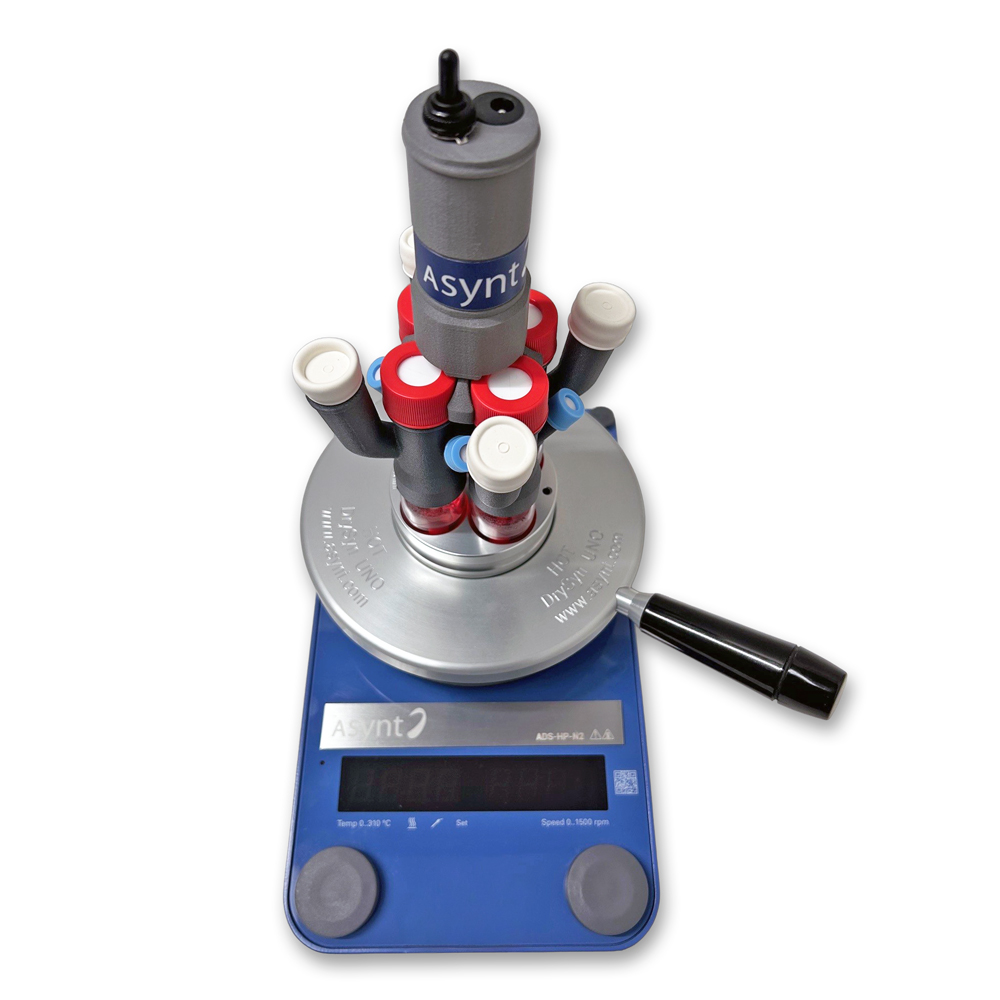
- Vials – The DrySyn MiniSpin provides powerful overhead stirring for reaction vials. It allows you to run four reactions in parallel. The MiniSpin is compatible with 20 mL vials and 2-dram vials (approx. 7 mL).
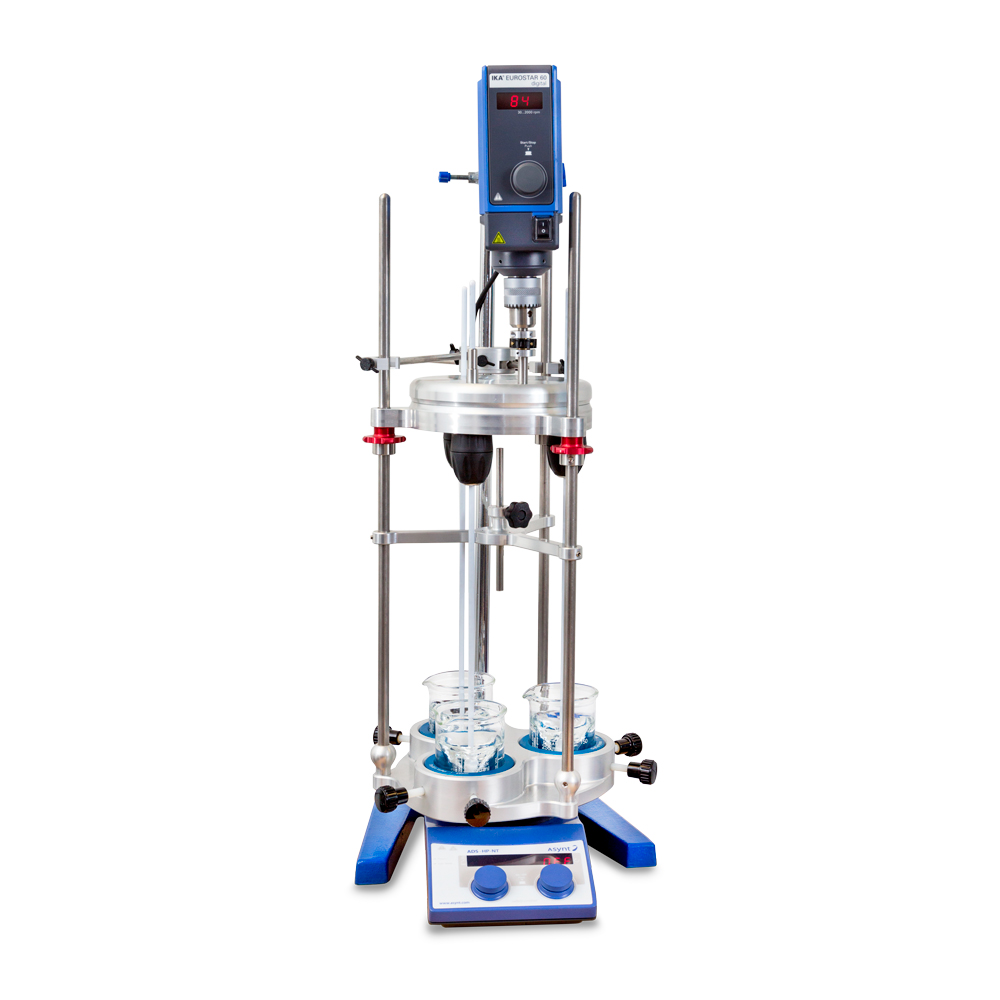
- Round-Bottom Flasks – The DrySyn Vortex allows you to mix three round-bottom flasks in parallel. The Vortex features a gearbox system with a reduction drive for slower, high torque stirring. It can be used with 100 mL, 250 mL, and 500 mL flasks.
- Beakers – The DrySyn Vortex Blend has the same superstructure as the standard Vortex but is designed for working with beakers instead of round-bottom flasks. It was developed specifically to cater for scientists who need to test new formulations and blends of ingredients in parallel beakers.
- Jacketed Reactors – Asynt’s range of overhead stirred jacketed reactors come in a wide variety of volumes (100 mL to 30 L plus) and configurations. Likewise, the stirrer shafts are available in an array of different geometries. Our ReactoMate systems allow for easy adjustment of stirrer height relative to the reactor vessels. With both ReactoMate and Vortex you can operate the overhead stirring remotely.
Why these are ideal for scaling up:
Asynt’s overhead stirring range encompasses volumes from ~7 mL up to 30 L plus. This allows researchers to move from small-scale, benchtop screening reactions, to pilot-scale reactions. By enabling overhead stirring across this process, researchers can more easily work with viscous fluids and solids, while maintaining similar impeller dynamics throughout for greater reproducibility.
Conclusion:
Overhead stirring provides powerful mixing across a wide range of scales, and Asynt’s laboratory tools aim to cater to a breadth of these, from benchtop to pilot. If you’d like to know more about any of the equipment mentioned in this blog, please don’t hesitate to get in touch. You can call us on 01638781709, email us at [email protected], or message us via the live chat in the bottom right-hand corner.