Shine More Light On Your Integrity 10 This January
We’re excited to introduce the Lighthouse for Integrity 10, a new photoreactor module designed to bring powerful, flexible photochemistry directly to your Integrity 10 Reaction Station.
By adding Lighthouse modules, the Integrity 10 becomes a true photochemical workhorse, allowing up to six light driven reactions to run simultaneously, each with its own wavelength, temperature and stirring conditions. Light is delivered directly into the reaction medium for reliable, reproducible results, while the Integrity 10 continues to do what it does best: precise control, parallel experimentation and intuitive data capture.
From rapid condition screening to carefully controlled optimisation studies, Lighthouse gives your Integrity 10 a bright new capability, all within a safe, light-tight and highly configurable setup.
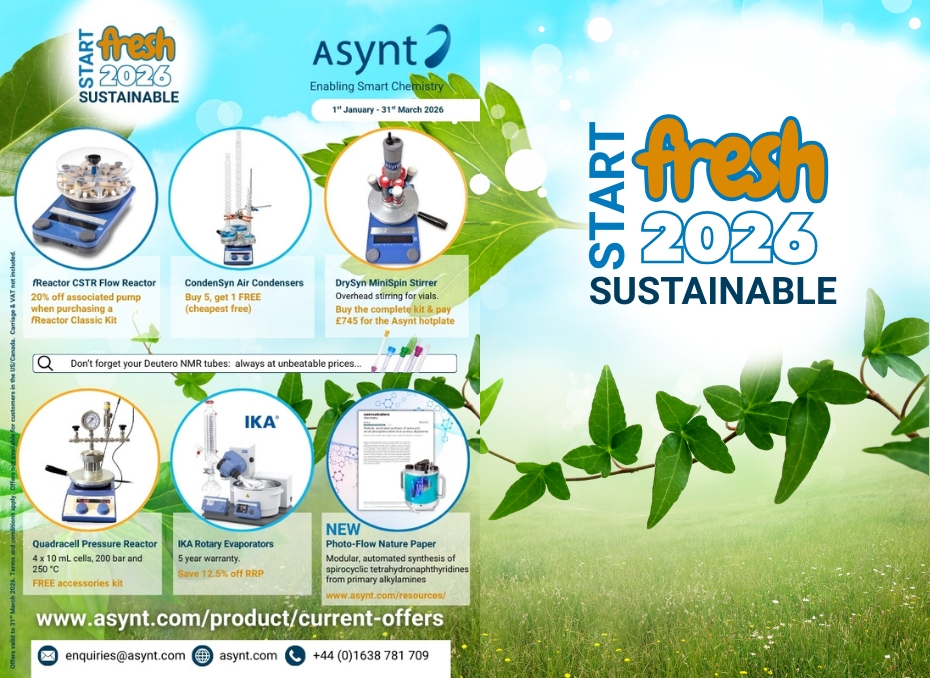
A New Year Is The Perfect Excuse To Give Your Lab A Serious Upgrade
From January through to March 2026, we’re rolling out a series of special offers across some of our most popular kit, designed to make upgrading, expanding or fine-tuning your setup that bit more appealing.
Whether you’re looking to strengthen a Flow Chemistry platform, sharpen your Photochemistry capabilities or give everyday lab work a boost, there’s plenty to get excited about. We’ve also included a few nods to equipment you’ll recognise from the literature, alongside practical extras that make a real difference at the lab bench.
In short, it’s a quarter full of smart savings on equipment chemists genuinely want to use, with quality, reliability and reproducibility firmly centre of the fume hood.

 Dry January And The Chemistry Of Alcohol-free Beer
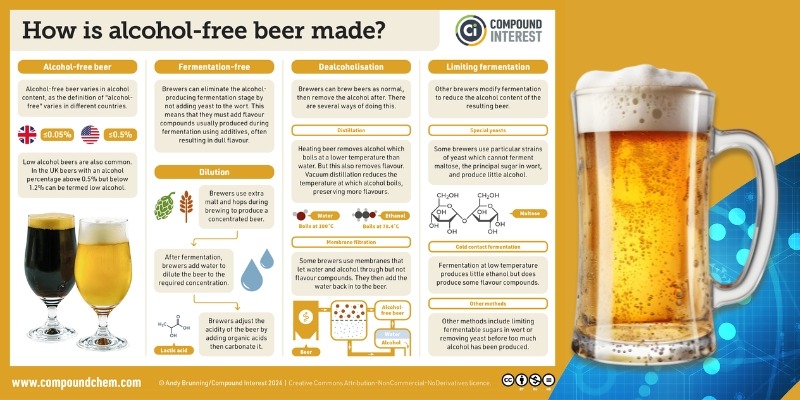
Dry January has become a familiar start to the year, with many people choosing to pause, reset or simply try something different. What’s less familiar is the clever chemistry that makes today’s alcohol-free beers taste so convincing.
Creating alcohol-free beer isn’t just a case of skipping the alcohol. Brewers still need fermentation to develop flavour, aroma and body, then use carefully controlled separation techniques to remove ethanol without stripping away everything else. Methods such as vacuum distillation and membrane filtration rely on fundamental chemical principles to keep the character of the beer intact.
As highlighted by Compound Chem, advances in process chemistry and engineering have transformed alcohol free beer from a compromise into a genuinely enjoyable option. It’s a great example of how chemistry shapes everyday products, often in ways we don’t even notice.
So this Dry January, whether you’re taking part, or simply curious, raise a glass to the chemistry quietly doing the hard work behind the scenes.
 New Year, New Reactions…
January is a time for fresh thinking and new beginnings and this year we’re spotlighting a publication that embodies that spirit in chemical research.
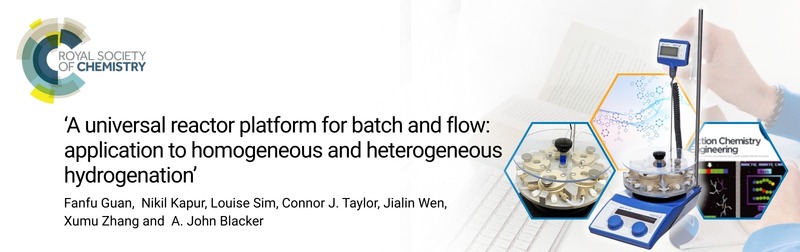
A team led by Fanfu Guan et al described a universal reactor platform that bridges batch and continuous flow processing, using an array of small stirred tank reactors to find optimal conditions and then seamlessly switch to continuous operation: the fReactor (www.freactor.com).
Their work demonstrates how flexibility in reactor design can accelerate development of both homogeneous and heterogeneous hydrogenation reactions.
https://pubs.rsc.org/en/content/articlelanding/2020/re/d0re00061b
What makes this work special is how it captures the essence of starting something new. By enabling rapid optimisation in batch and then moving into flow, researchers can make the most of both worlds and accelerate their journey from idea to reliable process.
As we move into 2026, it’s a great reminder that innovation often comes from rethinking familiar workflows, being open to flexible tools and not being afraid to reconfigure how we approach experiments. Here’s to a year of productive optimisation, smooth transitions and exciting new chemistry.
 Open Access to Chemistry Resources Library
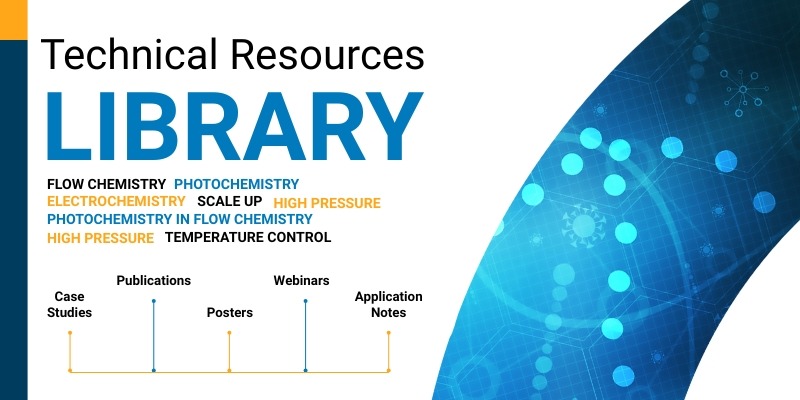
Our new chemistry resources library features a wealth of reference materials. Constantly being refreshed with new papers, posters, webinars and useful literature.