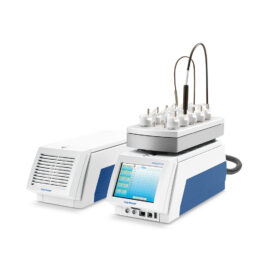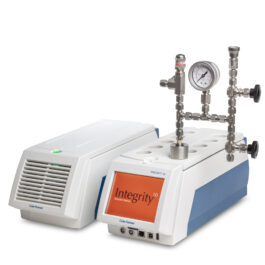
Lighthouse Integrity 10 Photoreactor Module
Take your lab to the next level with Asynt’s Lighthouse Integrity 10 photoreactor module.
The Integrity 10 enables users to run 10 separate reactions in parallel, setting the temperature and stir rate individually for each cell. By adding a Lighthouse Photoreactor Module to the cell, with as many as six modules accommodated across the platform simultaneously, users can carry out photochemical reactions using a different wavelength in each position if desired.
Robust, high-safety LED photochemical reactor system
The unique Lighthouse Integrity 10 Photoreactor Module has an aluminium body and base, quartz reactor rod head from carbon-filled PTFE with light directly into the sample, giving equal light penetration and reducing loss of energy. This system prevents loss of light penetration into sample which, when it occurs, reduces photon flux efficiency.
Sustainable photochemistry screening
The Integrity 10, paired with the Lighthouse Photoreactor Module, is a safe and sustainable solution for photochemical reaction screening. The system is suitable for unsupervised use, with data accessible remotely. This means that up to 10 chemists can use the platform at the same time, taking up little lab space with a compact footprint and enabling sustainable use of resources.
Talk with us…
Get in touch to talk through how this system would benefit your chemistry. Send your details via the buttons here, request a quotation, or use our Live Chat to speak to someone today.
- Robust 10 W LED photochemistry solution for the Integrity 10 Reaction Station
- Use up to 6 modules simultaneously
- Use a different wavelength in each position if desired
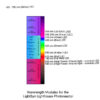
- Wide range of wavelength options available
- Light-tight and safe photochemistry
- Temperature range: -30 °C to 80 °C
- Magnetic stirring with agitation bar
- Anodised aluminium body, quartz reactor rod head from carbon-filled PTFE

UK / USA / Europe / Global Delivery

Developed in collaboration with our clients / Bespoke design service

Committed to developing sustainable & practical improvements for scientists worldwide

Martyn Fordham, MD