Molecular Halloween Chemistry with Dr Josh Smalley | New Scientist Live 2025
Join Dr Josh Smalley at New Scientist Live 2025 for “The Spooktacular Science of Baking,” with molecular Halloween chemistry.
The Lennox Lab are interested in fundamental reactivity and mechanism in organic chemistry, and how these insights can be used to create novel synthetic organic methods with sustainability and
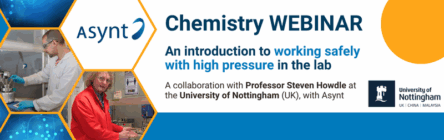
Professor Steven Howdle (University of Nottingham) explains ways chemists working at high pressure can improve lab safety, and considerations to bear in mind when designing a pressure system.
Flow chemistry and photochemistry are both growing areas of research. Both processes opening new novel synthetic routes.
Batch and flow represent two crucial, but disparate, chemical processes. Each has its own set of benefits depending on the requirements of your laboratory. In this blog I’ll run through some of the differences between them, and advantages of each, and highlight some of their shared strengths.
Case Study: Sustainable chemistry at the University of Liverpool and a day in the life of a chemistry student…
We are thrilled to share news of our expansion and the official opening of Asynt’s comprehensive demo suite. Online and on-demand technical support Sometimes you just need to actually see
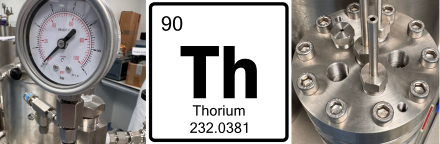
A molten salt reactor (MSR) is a nuclear reactor that uses molten salt as the primary reactor coolant. The coolant is either mixed with the molten fissile salt or surrounds the fuel rods
The Maillard Reaction works hard over the 4th July holiday weekend. Will you be firing up your BBQ? If so, you’ll want to know all about it!
Asynt achieved ISO 9001 for Quality Management and ISO 14001 for Environmental Management, two internationally respected standards that reflect how we operate behind the scenes, not just the science we support.