Earlier this year, Asynt visited the Cresswell group at the University of Bath’s Chemistry Department, to film their labs and interview some of the students using Asynt equipment for their research.
Here are the videos from our visit:
Photoredox Catalysis with Continuous Flow
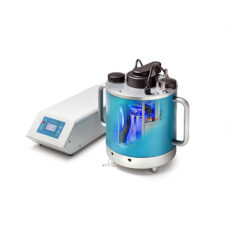
Hannah Ryder discusses how she’s been using Asynt PhotoSyn for photoredox catalysis to functionalise amines without protecting groups. This is difficult due to end reactivity but can be combatted with low temperatures.
Using the PhotoSyn, Hannah is generating alpha amino radicals, using photochemistry, at -25 C. At this temperature, icing is prevented via a strong flow of nitrogen. She’s found that, for this process, flow produces a much higher yield than batch. This is in part enabled by the PhotoSyn’s powerful, 700 W LED lamp. She’s using coil reactors up to 20 mL Volume.
Sub-ambient, Continuous Photochemistry for Amines and Scaffolds
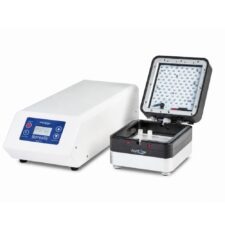
Darren Richards, final year PhD student, discusses his research developing factionalised amines at alpha positions to access scaffolds like azetidines and sulfuryl fluorides.He’s aiming to access amine reactions at the carbon atom adjacent to the nitrogen. This relies on radicals to access scaffolds, a process that normally requires a large amount of energy.
Using Asynt’s PhotoChip they can run this process at lower temperature using power from photons rather than heat. Photochemistry also allows for improved selectivity. The Glass Static Mixer (GSM) in the PhotoChip ensures the reactants only mix at the desired temperature (in Bath’s can -20 C and lower) and while irradiated. This process has allowed for 70 to 80 % yields and the development of scale up towards kg scale industrial applications.
Studying and Researching Chemistry at the University of Bath
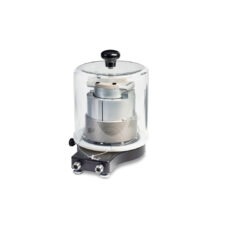
Emma (4th year PhD student) and Callum (1st year PhD student) discuss their research and experience studying Chemistry at the University of Bath. The research involves the synthesis of alpha a related pyrrolidines and functionalised amines. Using light (via photochemistry) allows for completely orthogonal reactions, and reduces the reliance on heavy metal catalysts. The starting material is made in flow using the Asynt PhotoSyn, and solvents are evaporated using Asynt’s Spiral Evaporator.
Continuous Photochemistry for API Research
Alex Olsen, 2nd year PhD student, discusses his research in automated, sustainable API manufacturing. This often involves long synthesis pathways. This makes it ideal for automation and flow chemistry. This is better for sensitive reactions and allows for a cleaner, faster process with higher yields and access to high energy intermediates.
With their amino alkylation synthesis reactions suffered from over alkylation. This was solved by moving from batch to flow. The PhotoSyn itself provides 700 W of LED irradiation (Bath use blue light) and powerful cooling (Alex runs his unit at -20 C).
A wide range of coil sizes are available and the PhotoSyn’s modularity allows it to be run with any equipment, both commercial and custom.
Conclusion:
Many thanks to Professor Alex Cresswell and his group at the University of Bath for making these videos with us. It was fantastic to visit and see the labs in action!
If you have any questions regarding any of the Asynt laboratory equipment from these videos, please don’t hesitate to get in touch. You can email us via [email protected], call us on 01638781709, or send a message via the live chat in the bottom right hand corner.