Light Powered Chemistry and Smarter Reaction Optimisation in the Asynt May 2026 Chemistry Newsletter
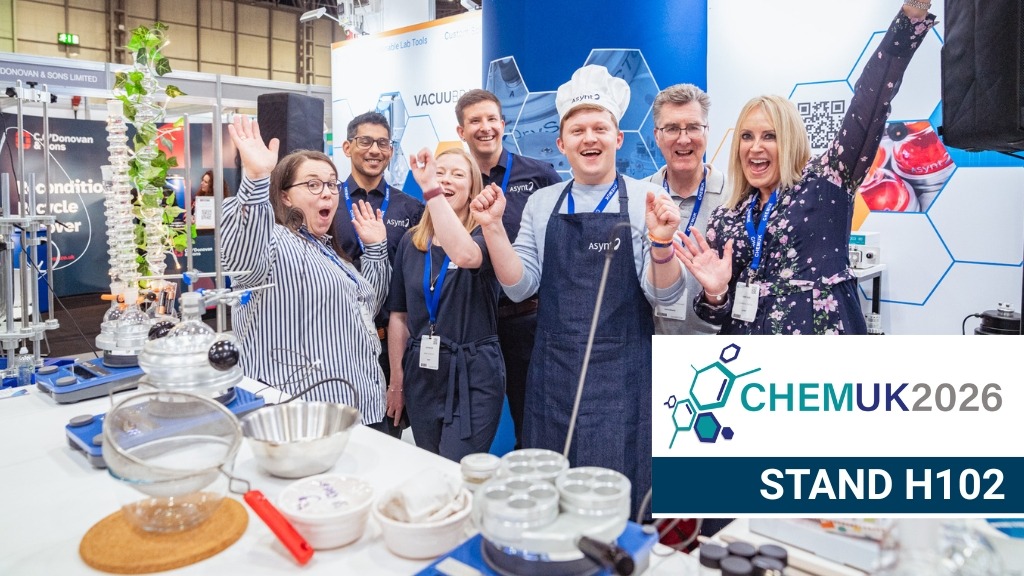
Asynt are heading back to ChemUK at the NEC Birmingham and we would love to see you there.
This year’s Asynt stand will be packed with live demonstrations, practical insight and real chemistry you can experience first hand.
We are absolutely thrilled that Dr Josh Smalley, from the “Great British Bake Off” will once again be joining us with his colourful chemistry culinary displays, bringing reactions to life in a way that is both visually engaging and scientifically meaningful.
Come and find us on booth H102 on Day 1 (Wednesday 20th May) at midday to see him in full swing.
We are also delighted to confirm that our Technology Manager, Andrew Mansfield, will be presenting an exciting overview on “Illuminating Flow – Unlocking Photochemical Pathways for Controllable Selective Synthesis.” on the Stage 5 on Day 2 (Thursday 21st May) from 11.20 to 11.40 am, sharing practical insights from real-world applications.
We will be showcasing a range of technologies designed to make lab life smarter, safer and more sustainable, including solutions for Flow Chemistry, Photochemistry, pressure chemistry and temperature control. Whether you are developing new chemistry processes or refining existing workflows, our team will be on hand to help.
If you are attending ChemUK 2026, please do stop by stand H102 and say hello.
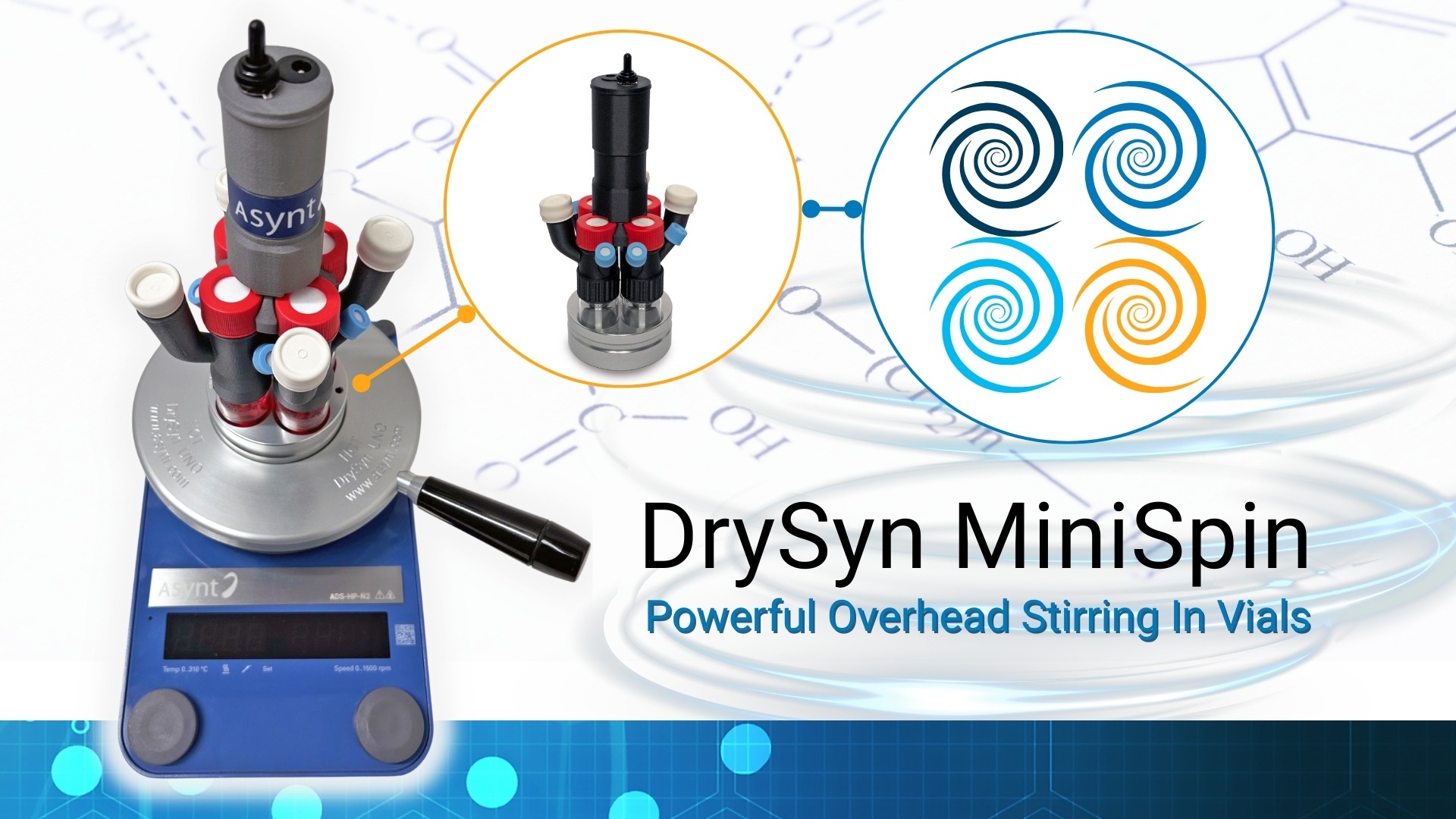
Not Every Reaction Is Suited To A Magnetic Stirrer
Introducing Asynt’s DrySyn MiniSpin – excellent overhead stirring for small reaction vials.
Why DrySyn MiniSpin makes a difference:
- high torque stirring for viscous materials and dense suspensions
- no loss of coupling, even as viscosity increases
- reduced risk of sample damage where materials are susceptible to grinding by a stir bar
- controlled, reproducible mixing at small scale
- mixing behaviour that translates more naturally when moving towards jacketed reactors and larger scale systems
When is MiniSpin the right choice?
- viscous or heterogeneous reaction mixtures
- applications where magnetic stir bars decouple or behave inconsistently
- sensitive solids or suspensions where shear and grinding must be minimised
- early stage process development with scale-up in mind
- parallel synthesis workflows where consistency matters
Small format, serious stirring.
Want to know more? Visit the info page (DrySyn MiniSpin) or email [email protected].
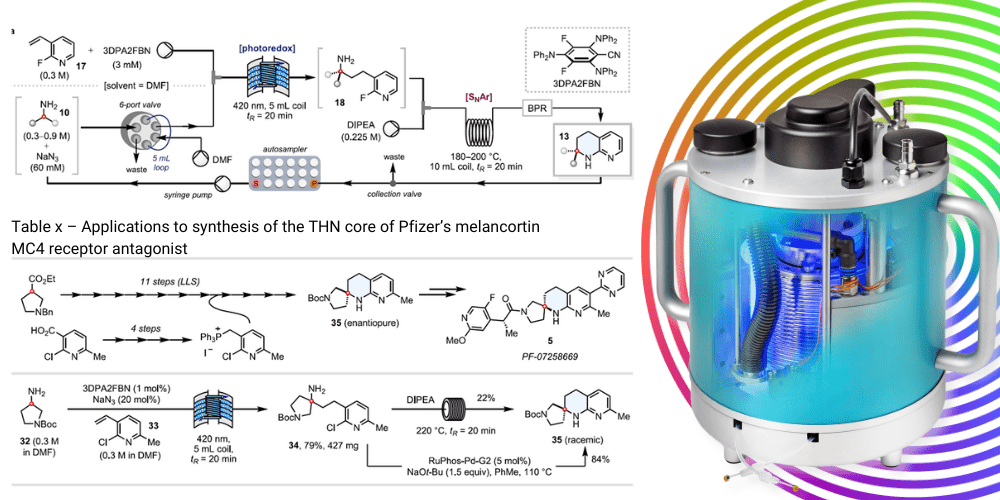
Curious How Far Automated Flow Chemistry Can Go?
In this study, by Qiao Cao, Josh Tibbetts, Gail Wrigley, Adam Smalley and Alexander J. Cresswell, Asynt’s PhotoSyn powered a key continuous-flow photoredox step, helping drive a fully automated route to spirocyclic THN scaffolds with control and efficiency.
Read the full paper by clicking HERE.
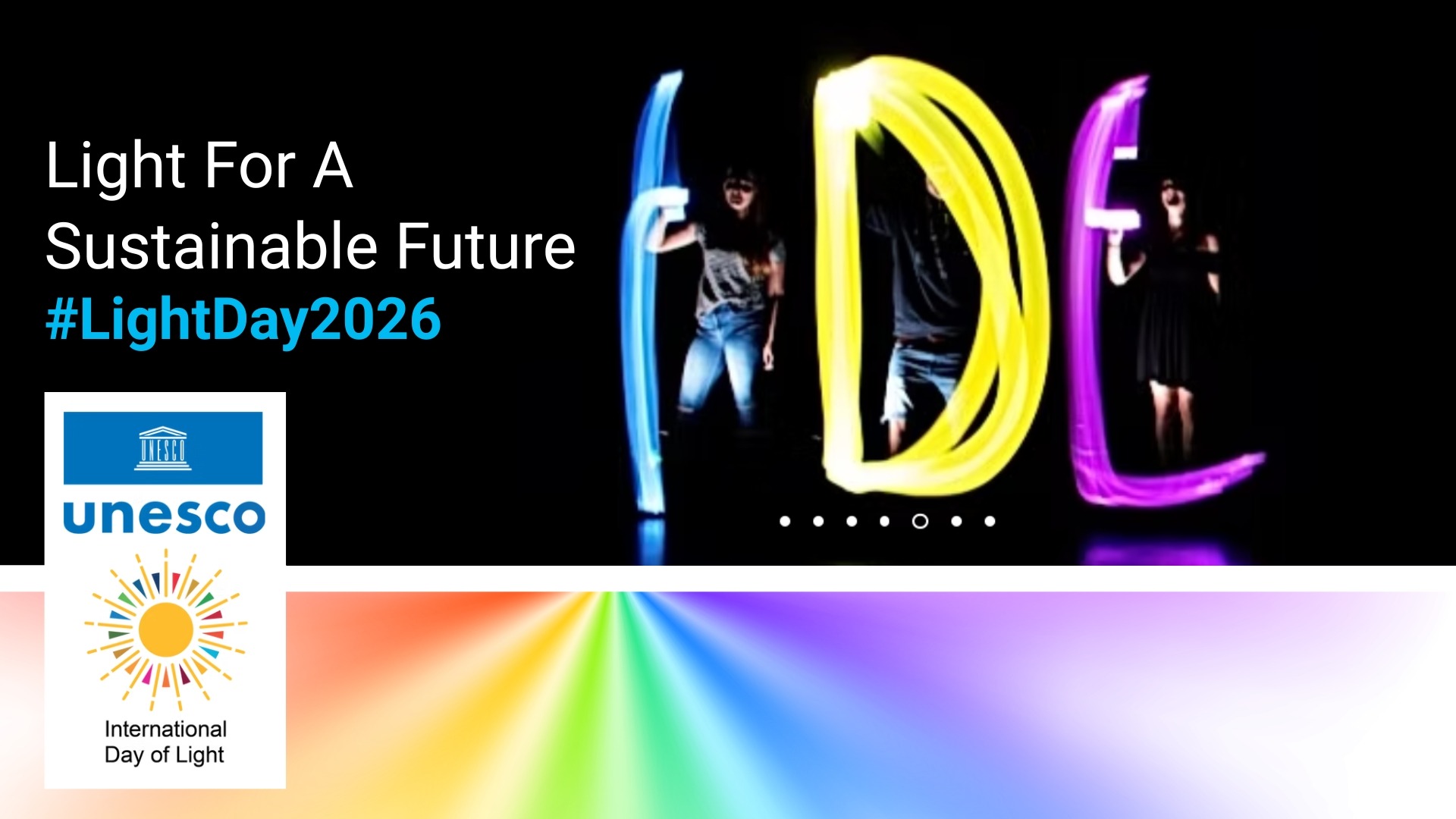
International Day of Light: Illuminating New Possibilities In Chemistry
On the 16th May, International Day of Light celebrates the science and impact of light across our world, from fundamental research through to technologies that shape how we live and work. For chemists, light is far more than illumination. It is a powerful reagent in its own right, unlocking new reaction pathways, improving selectivity and enabling transformations that simply cannot be achieved through traditional approaches alone.
Photochemistry continues to open exciting new frontiers, allowing researchers to rethink how molecules are built and processes are optimised. With advances in LED technology, reactor design and precise wavelength control, light driven chemistry is becoming more accessible, scalable and reproducible than ever before.
At Asynt, we are passionate about helping scientists harness the power of light with confidence. Our photochemistry range has been developed to provide controlled, reliable irradiation alongside practical, user friendly reactor platforms that integrate seamlessly into modern laboratory workflows. Whether you are exploring new synthetic routes, accelerating discovery or refining established processes, photochemistry offers a bright new dimension to your research.