Introducing the Asynt March 2026 Chemistry Newsletter:
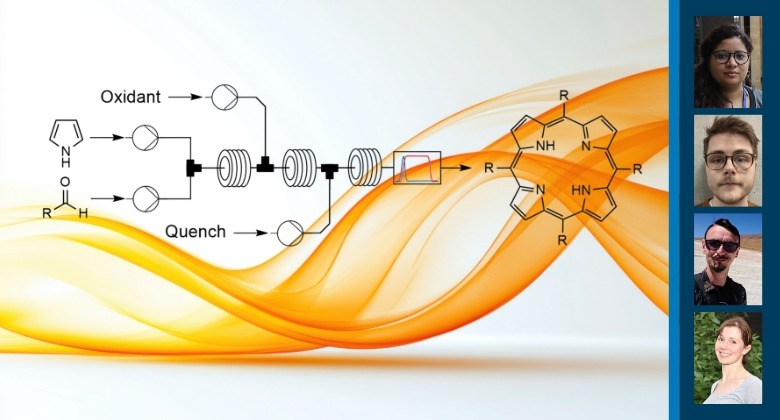
Continuous Flow Synthesis of Meso-substituted Porphyrins With Inline UV-Vis Analysis
Porphyrins are some of the most elegant and important molecules found in nature, from chlorophyll driving photosynthesis to haem enabling oxygen transport. As we move into spring, when the chemistry of the natural world comes back into focus, it feels like a fitting time to revisit these remarkable structures.
In their recent paper, “Continuous Flow Synthesis of Meso-substituted Porphyrins with Inline UV–Vis Analysis”, Firdaus Parveen, Henry Morris, Harvey West and Anna Slater from the University of Liverpool present a modern and insightful approach to porphyrin synthesis. By combining continuous Flow Chemistry with inline UV–Vis analysis, the team demonstrate how meso-substituted porphyrins can be prepared with greater control, efficiency and understanding.
Porphyrins have long played a central role in natural products and bio-inspired chemistry, yet their synthesis is often sensitive, time-consuming and difficult to reproduce. Translating this chemistry into Flow offers clear advantages. Reaction conditions are tightly controlled, heat and mass transfer are improved and scale-up becomes more straightforward compared to traditional batch methods.
A particular strength of this work is the use of inline UV–Vis monitoring. Given the strong chromophoric nature of porphyrins, real-time spectral analysis provides an intuitive and powerful way to track reaction progress. This removes the need for repeated offline sampling and allows optimisation to happen as the chemistry unfolds.
For researchers working in catalysis, photochemistry, materials science or natural product synthesis, this study highlights how continuous flow and inline analytics can transform traditionally challenging chemistries. It is a timely reminder that as inspiration from nature grows with the season, so too do the tools available to explore and reproduce its chemistry.

Sláinte!
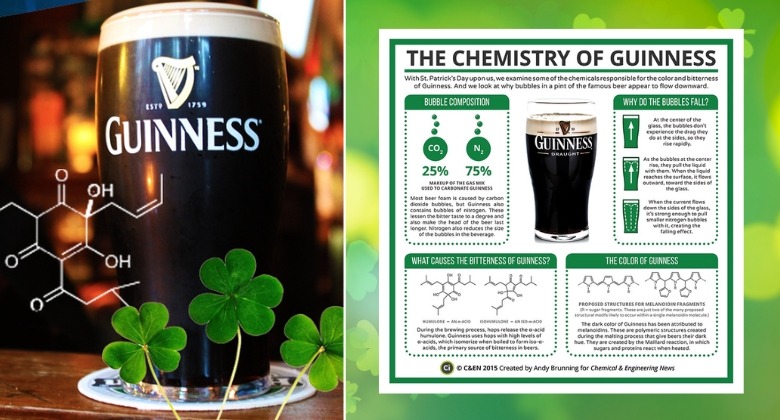
St Patrick’s Day is often associated with green celebrations and a well-earned pint of Guinness.
Hops are far more than a traditional brewing ingredient. These flowering cones bring bitterness, aroma and stability to beer, shaping everything from crisp lagers to rich stouts and hop forward ales. Their role is a carefully balanced piece of chemistry, where timing, temperature and molecular structure all influence the final flavour in the glass.
The characteristic bitterness of beer comes from hop alpha acids, which are transformed during the brewing process to give that familiar bite. Alongside this, a complex mixture of natural oils contributes floral, citrus and spicy notes, with subtle changes in hop variety or processing leading to very different sensory profiles. When hops are added later in the process, or even after fermentation, the chemistry shifts again, enhancing aroma without increasing bitterness.
This interplay between natural products and process chemistry is a great example of applied science at work. Brewing combines organic chemistry, thermal control and reaction optimisation in much the same way as a laboratory synthesis, with the added pressure that the end result has to taste good too.
So as St Patrick’s Day rolls around, it’s worth remembering that behind every green tinted celebration is a finely tuned piece of chemistry. Proof that sometimes the most familiar traditions are underpinned by some of the most fascinating science.
Sláinte!
Catalytic Approaches To Transform Sustainable Feedstock Chemicals
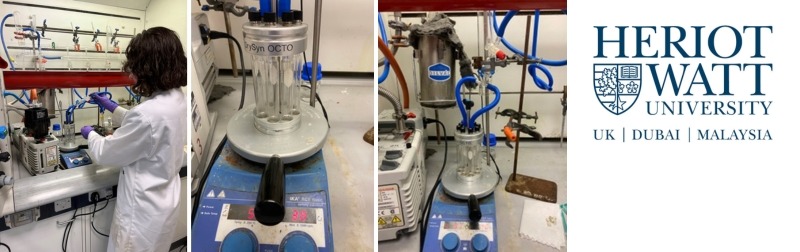
Developing polymer materials that deliver performance without long-term environmental persistence is one of the key challenges facing modern materials chemistry. At Heriot Watt University, the Donnelly Lab, within the Institute of Chemical Sciences, is addressing this through innovative catalytic approaches to transform sustainable feedstock chemicals into high value, degradable materials.
The team is using the DrySyn Octo parallel synthesis reactor to accelerate research into polymer backbone modification. By screening catalysts and reaction conditions in parallel, they are able to rapidly explore chemical space and identify optimal routes towards new degradable polymer architectures. This medium-throughput approach significantly reduces the time and resources required compared to traditional sequential experimentation.
This work is particularly important given the durability of many conventional polymers, which can persist in the environment for decades. Designing materials with controlled degradability requires precise control over reaction conditions and systematic optimisation of chemistry. The DrySyn Octo enables this by providing consistent, well controlled reaction environments across multiple experiments, allowing meaningful comparisons and data-driven decision making.
The versatility of the DrySyn Octo is a key advantage for this type of research. Its ability to handle diverse chemistries in parallel supports efficient catalyst screening and rapid iteration, helping researchers move from concept to validated chemistry more quickly.
The work carried out by the Donnelly Lab demonstrates how parallel synthesis tools can play a vital role in advancing sustainable polymer research. By enabling faster optimisation and more efficient experimentation, the DrySyn Octo supports the development of materials designed with both performance and environmental responsibility in mind.
Many thanks to the Donnelly Lab at Heriot-Watt University for sharing their feedback and insights into the use of the DrySyn Octo. If you would like to find out more about the DrySyn Octo or any of our synthesis tools, our team would be happy to help.
Stronger Together – Wherever We Are
A strong distribution network is fundamental to how Asynt supports chemists around the world. Our distributors are not just sales partners, they are local experts who understand regional research priorities, regulatory landscapes and laboratory workflows. This close collaboration allows us to deliver responsive support, technical insight and long term relationships that go far beyond supplying equipment.
Working with trusted distributors ensures that customers have access to local knowledge backed by Asynt’s in house expertise. From early stage discussions through to installation, training and ongoing support, this partnership model helps researchers move their chemistry forward with confidence.
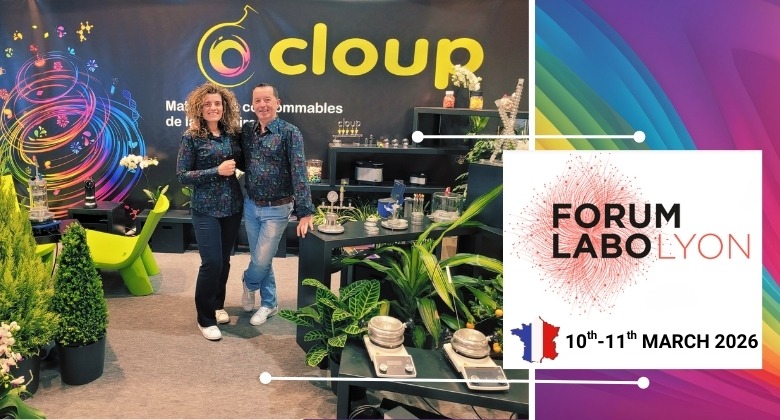
One such partnership we are particularly proud of is our long-standing collaboration with Cloup in France. Cloup’s deep understanding of the French scientific community and their commitment to customer support make them an invaluable extension of the Asynt team.
In March 2026, Asynt will be working alongside Cloup at Forum Labo, one of Europe’s leading exhibitions for laboratory, research and process professionals. Forum Labo brings together scientists, engineers and suppliers from across academia and industry, creating an ideal environment to explore new technologies, discuss emerging challenges and share ideas.
Visitors to Forum Labo will have the opportunity to speak directly with the Cloup and Asynt teams, see key products up close and discuss real world applications across synthesis, Flow Chemistry, Photochemistry and more. Whether you are looking for practical solutions to everyday lab challenges or exploring new approaches to sustainable and efficient chemistry, Forum Labo offers valuable insight and conversation in one place.
If you are attending Forum Labo in March 2026, we would love to see you there and catch up in person. More information about the event can be found here:
https://www.forum-labo.com.
Strong partnerships, shared expertise and face-to-face conversations remain at the heart of how we support the chemistry community and Forum Labo is a great place to see that in action.
If you’d like to know anything further about any article in this months chemistry newsletter, please don’t hesitate to contact us.