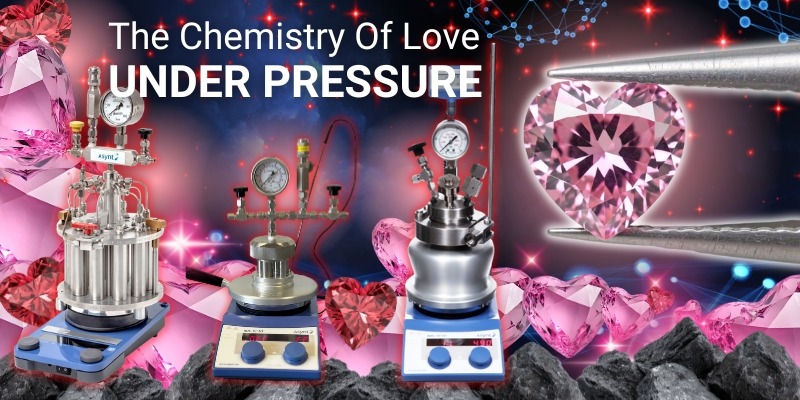
The Chemistry Of Love… Under Pressure
February brings Valentine’s Day, romance and of course diamonds. But did you know that diamonds do not have to come from deep within the earth?
Synthetic diamonds are created by recreating nature’s conditions in the lab using very high pressure and high temperature. Carbon is placed under immense pressure, often tens of thousands of atmospheres and heated to extreme temperatures until it crystallises into diamond. It is chemistry under pressure in its purest form.
This same principle underpins many areas of modern research. Controlled high pressure environments allow chemists to explore new reaction pathways, stabilise unusual intermediates and drive transformations that simply are not possible at ambient conditions.
At Asynt, our pressure reactor range is designed to give researchers confidence and control when working under pressure. Whether you are studying reaction mechanisms, developing new materials or exploring extreme chemistry, reliable pressure control can unlock entirely new possibilities.
So, this Valentine’s Day, we are celebrating the chemistry of love, pressure-tested and scientifically proven.
Now over to you, are you a real diamond romantic, or a lab grown diamond convert?
Review our wide range of laboratory pressure reactors while you contemplate the question…

 How a Versatile Electrochemical Batch Reactor is Broadening the Frontiers of Electrosynthesis
Electrochemistry is emerging as a powerful tool in both synthetic and analytical chemistry, offering mild reaction conditions and sustainable pathways for complex transformations.
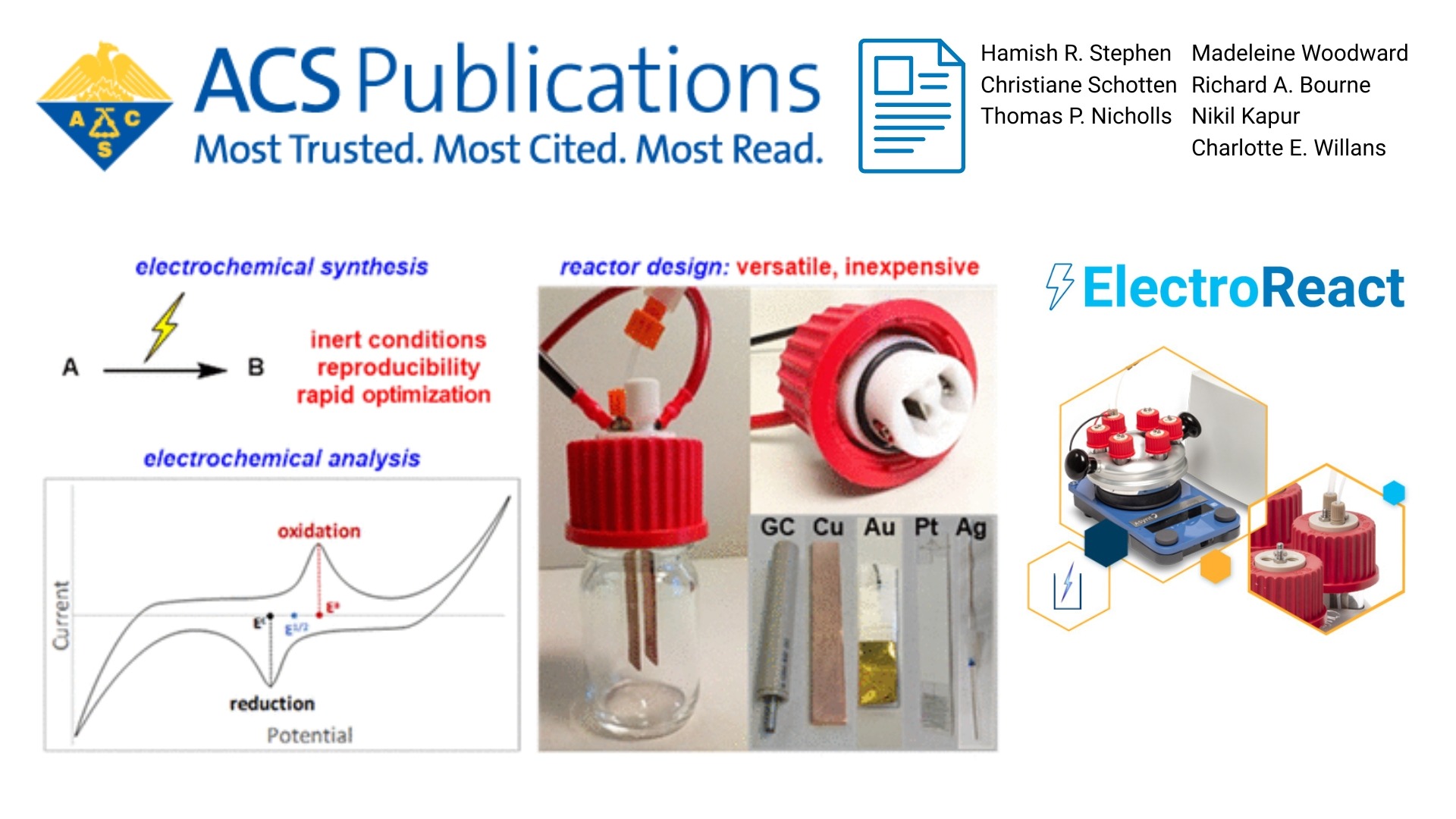
A recent publication in Organic Process Research & Development showcases how a standardised electrochemical batch reactor design is helping chemists unlock new possibilities across organic and inorganic synthesis. You can view this paper online here: https://pubs.acs.org/doi/10.1021/acs.oprd.0c00091
The reactor at the heart of this work is ElectroReact. Based on a simple, commercially available vial fitted with a customised lid that precisely fixes electrode positions and maintains reproducible interelectrode distances. This elegant design removes common sources of variability in electrochemical experiments and brings real practicality to laboratory electrosynthesis.
Visit the dedicated ElectroReact info-site: www.ElectroReact.com
What makes this system truly exciting is its broad applicability. In the study, the reactor has been used to generate a range of metal–N-heterocyclic carbene complexes including copper, gold and iron species. It has also been used to prepare a salen complex and to rapidly screen organic electrochemical transformations using a parallel plate setup.
Importantly, the reactor doubles as an analytical tool. With a potentiostat connected, high quality cyclic voltammetry data can be collected directly in the same vessel, making it a versatile platform that bridges synthetic and analytical electrochemistry.
This open, flexible and inexpensive design has helped lower barriers to entry in electrochemical research. It has since inspired commercial development of the ElectroReact flexible platform, bringing reliable electrochemistry capabilities into everyday labs and supporting a growing community of researchers exploring sustainable electrosynthesis.
Stay tuned for more stories on how ElectroReact is empowering chemists to innovate with confidence, and click below for further information on the platform.
 What Happens When World Class Chemists Gain Complete Temperature Control in Their Photochemical Reactions?
Photochemistry research relies on precise control over reaction conditions to unlock new chemistry and maximise efficiency.
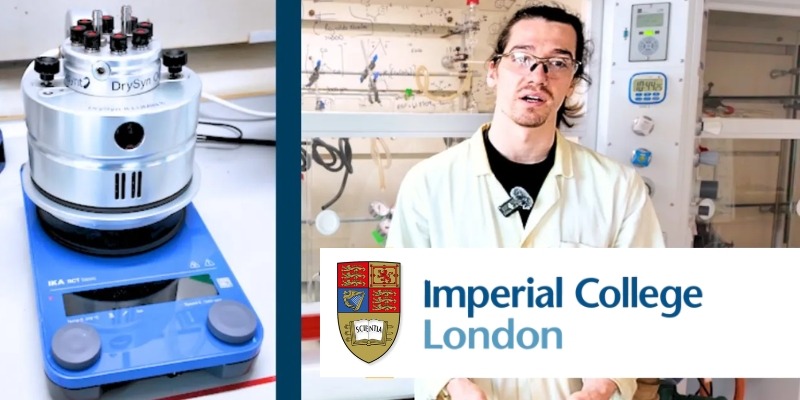
At Imperial College London, Rowan Bailey and the team in Mark Crimmin’s group have been putting Asynt’s Illumin8 cooling/heating base to the test in real world photochemical workflows.
Rowan paired the Illumin8 base with a chiller to deliver consistent, reliable temperature control across multiple simultaneous reactions. The result was seamless integration into their existing setup, excellent reaction temperature management and enhanced insight into reaction kinetics.
The team’s experience shows how complete temperature control can streamline research and expand the capabilities of parallel photochemistry systems.
Watch the full story on Asynt’s YouTube channel by clicking the button below.
 Discover The Asynt Demo Room: A Smarter Way To Explore Your Lab Options
Selecting new laboratory equipment is about understanding how technologies fit into real workflows, not running experiments or product trials. That is why Asynt created its dedicated demo suite, a space designed to help customers explore our product range in a practical and informative setting.
This space allows visitors to see the complete Asynt product portfolio, ask detailed questions and discuss their applications directly with our technical specialists. From pressure reactors and Photochemistry through to heating, stirring and Flow solutions, the focus is on understanding capability, configuration and integration.
Since launching the demo suite, it has become a valuable resource for customer visits, team discussions and remote demonstrations. It supports open conversations about challenges, scalability and system selection, helping customers make informed decisions with confidence.
Whether you’re new to Asynt, or planning the next stage of your laboratory development, a visit to the demo room or a virtual tour on Teams or Zoom, provides clarity, context and expert insight into what is possible.
If you’d like further information about anything here, or support from the Asynt technical team, you’re welcome to email [email protected], use the live chat here on our website, or give us a call. We look forward to talking with you.