Dr. Isla Gow, a post-doctoral research associate from the University of Cardiff shares details on her photochemistry research in collaboration with NAST, using the Asynt Lighthouse batch photoreactor:
Our research group (Edwards Group, Cardiff University School of Chemistry) uses photocatalysis to address real‑world challenges. This includes SunPad, our innovative reusable menstrual hygiene solution that uses sunlight, water and air to remove microorganisms from reusable sanitary pads. We also work on water remediation, developing photocatalytic solutions to remove chemical and biological contaminants from polluted water.
The Lighthouse is great value for money and was quick and easy to set up. This is especially important for our collaboration with NAST (Nepal Academy of Science and Technology) where space and resources are more limited. We were also really impressed with the safety features which also makes the equipment perfect for undergraduate researchers.
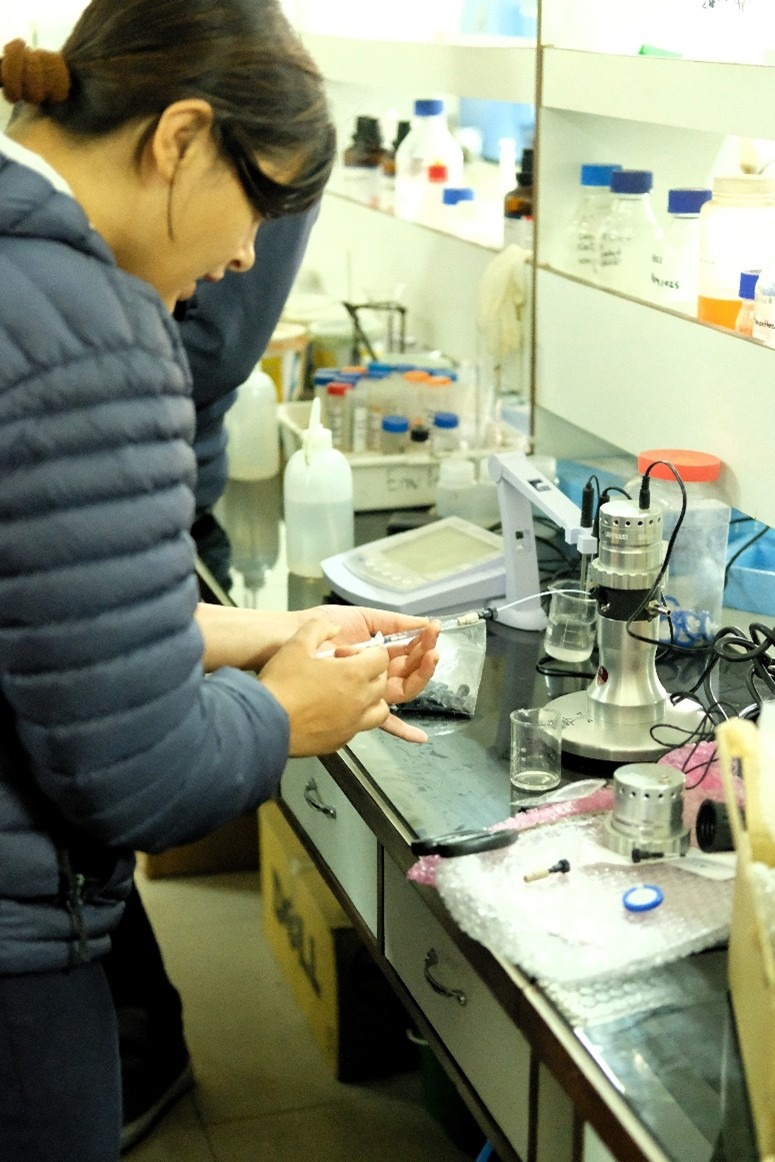
The fixed light source ensures consistent and reproducible work. The ability to take samples during reactions has also been particularly useful for tracking photocatalytic efficiency and reaction progress accurately.
The conditions we use are 365 nm and 460 nm at room temperature. This allows us to compare catalytic performance under UV and visible light. The Lighthouse has effectively supported this setup without any issues.
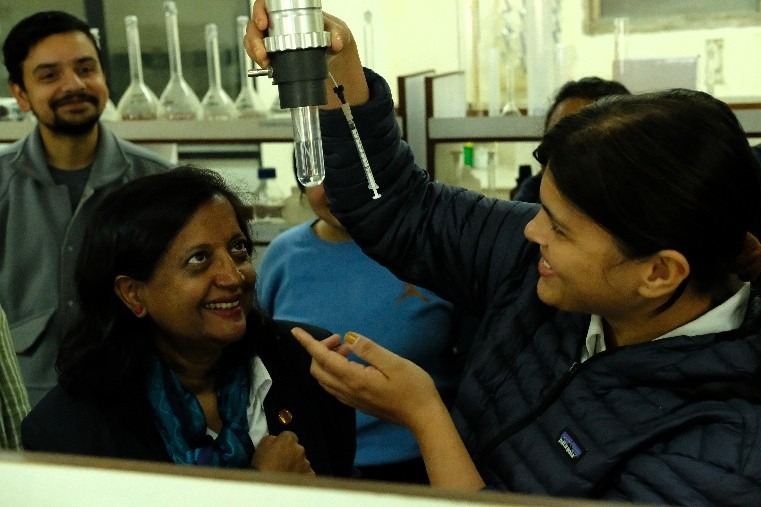
In Nepal, over 95% of wastewater is discharged into water bodies without treatment, making water pollution a severe and urgent issue, especially in the Kathmandu Valley. Dr Tista Prasai Joshi is a senior scientist at Nepal Academy of Science and Technology and a leading researcher in water purification and microbiology. Together, we are developing model photocatalytic systems that can be optimised in Cardiff and then sent to her team for testing in their Lighthouse reactor using real water samples from Nepal. We hope this collaboration will help to create practical solutions which can contribute to safer water for local communities.
Our next steps focus on expanding and refining our photocatalytic systems to maximise their performance under real‑world conditions. We are optimising catalyst formulations for greater stability and efficiency under different light sources, developing systems that are robust, low‑cost, and suitable for deployment in resource‑limited settings. At the same time, we are expanding the scope of our applications through the ongoing development of our antimicrobial textiles.
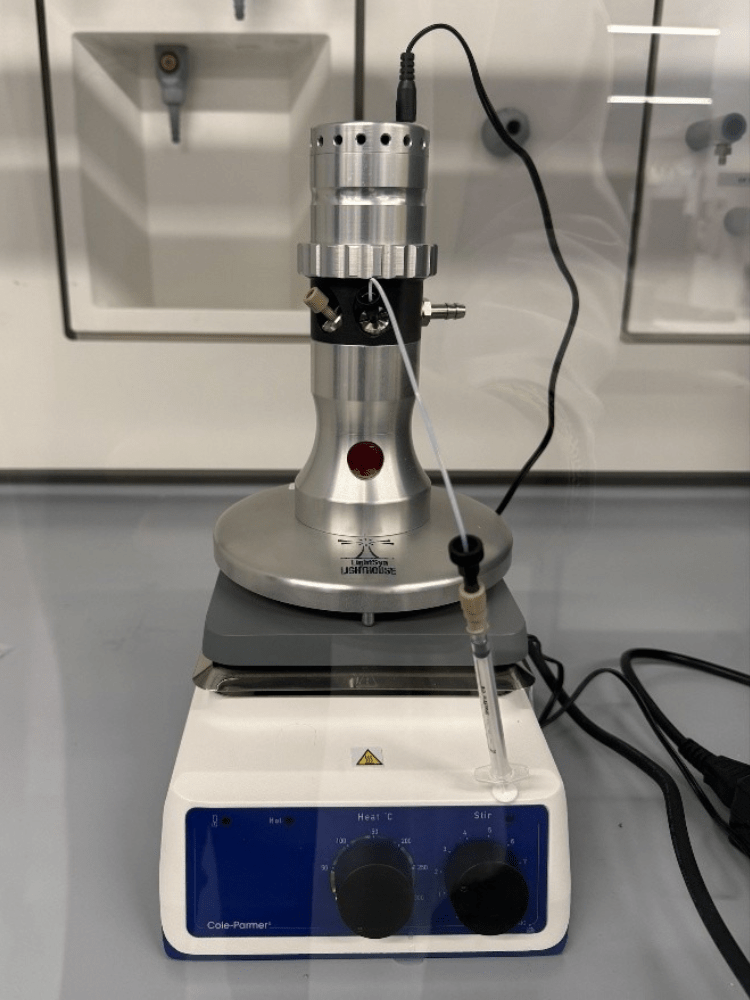
We find it difficult to clean the sampling tube thoroughly, and the current design requires us to remove a relatively large volume each time we take a sample. For small‑scale photocatalytic reactions, this means we lose a significant proportion of the reaction mixture. A redesign that enables easier cleaning and allows for lower‑volume sampling would make the system even more user‑friendly and better suited to small‑scale experiments.
If you’d like to know more about the Asynt Lighthouse, please don’t hesitate to get in touch. You can email us via [email protected], call us on 01638 781709, or send us a message using the live chat in the bottom right-hand corner. We look forward to hearing from you!