Mixing is crucial to a huge range of chemical processes. Across this range, different applications require different equipment. Magnetic stirring and overhead stirring are two of the most prominent solutions, and each is suited to different types of process.
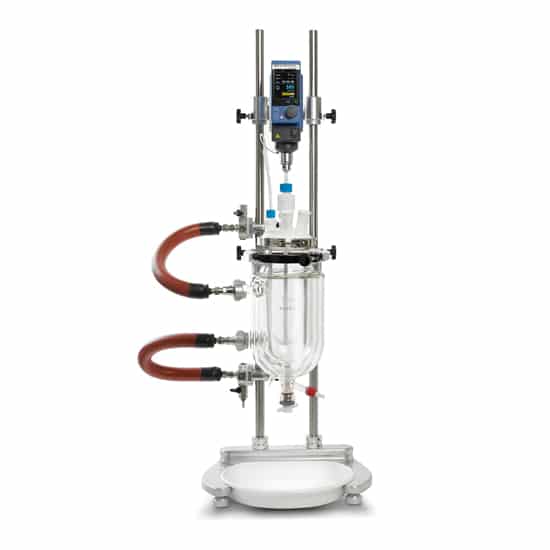
The ReactoMate Datum is designed for overhead stirring of jacketed reactors
Benefits of Magnetic Stirring
- Smaller volumes – Magnetic stirring is ideal for most mixing applications in reaction vials and round bottom flasks.
- Straightforward – Magnetic stirring is very easy to set up and run. With a stirrer hotplate and magnetic stirrer bar, you can be up and running in seconds.
- Ideal for high pressure – Magnetic stirring is an excellent solution for mixing the contents of many high-pressure reactors.
- Compact set up – Magnetic stirrer hotplates are compact and will comfortably fit inside a fume hood.
- Easily combined with heating – Magnetic stirrer hotplates are one of the most ubiquitous tools in any laboratory. They provide an efficient and effective solution for heating and mixing reactions safely.
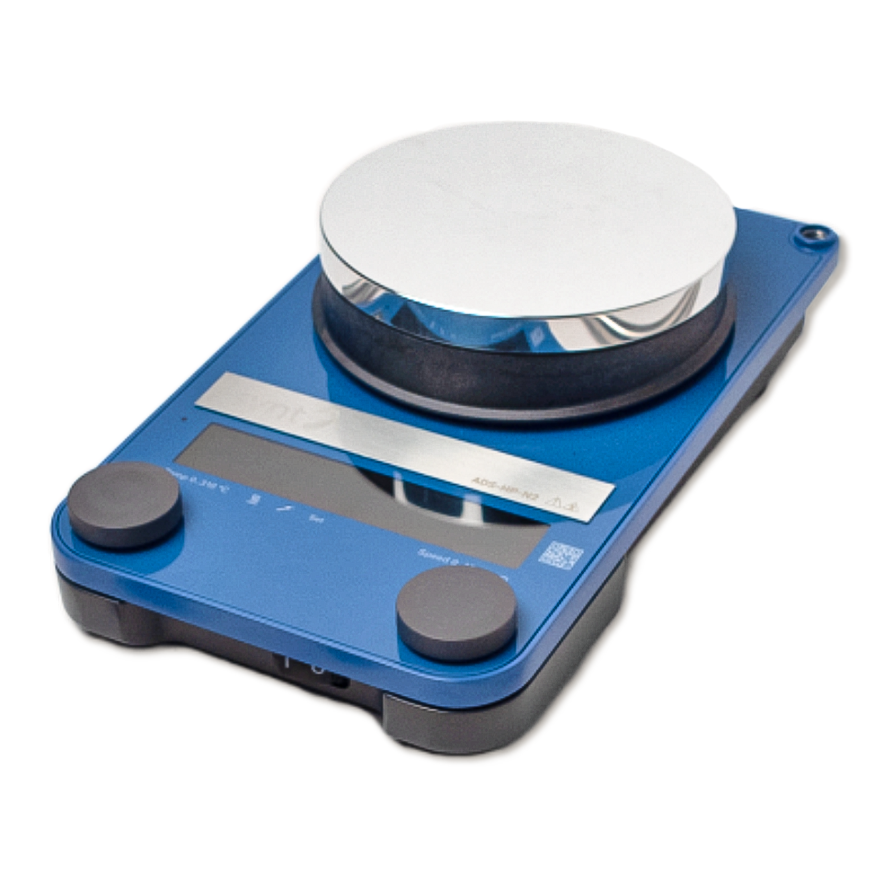
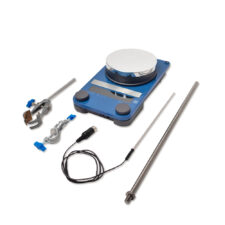
Magnetic stirrer hotplates provide an effective combination of mixing and heating
Benefits of Overhead Stirring
- Larger volumes – Overhead stirring is ideal for larger volumes, for example when working with jacketed reactor vessels. It provides powerful and efficient mixing on a multi-litre scale.
- Viscous materials – Highly viscous liquids can preclude the use of magnetic stirring. The higher torque provided by overhead stirring allows for the mixing of much more viscous reactants, making it ideal for many polymer chemistry applications.
- Suspended solids – Stirrer bars spinning against the bottom of a flask or vial can grind solids held in suspension. Overhead stirrers do not come into contact with the vessel itself, helping to avoid this issue and making them well suited to reactions involving suspended solids or crystals.
- High torque – Overhead stirrers provide significantly more powerful stirring than magnetic stirring, allowing them to maintain effective mixing under demanding conditions.
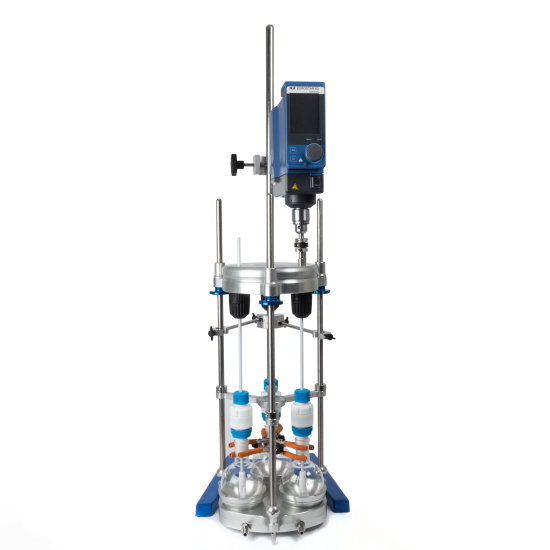
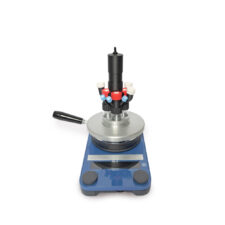
The DrySyn Vortex provides overhead stirring for round bottom flasks in parallel
How to Choose?
For simple, small-volume, low-viscosity reactions, magnetic stirring is usually the ideal choice. As reaction volume and/or viscosity increase, overhead stirring becomes the better option, particularly when working with suspended solids or polymers that require greater mixing power.
Asynt’s Tools
Whether your application calls for magnetic stirring or overhead stirring, Asynt offers a range of solutions to suit laboratories of every size.
- Hotplate Stirrers – A reliable magnetic stirrer hotplate remains the foundation of many laboratories, providing convenient heating and magnetic stirring for everyday synthesis.
- MiniSpin – The compact MiniSpin overhead stirrer provides an economical introduction to overhead stirring. Its small footprint makes it ideal for routine laboratory applications where greater torque than magnetic stirring is required without occupying valuable bench space.
- DrySyn Vortex – The DrySyn Vortex enables a single overhead stirrer to drive up to three reaction vessels simultaneously while heating on a standard hotplate. It is particularly useful for process development and parallel synthesis, offering efficient overhead stirring for reactions from 100 to 500 mL while handling much more viscous materials than magnetic stirring alone.
- ReactoMate Jacketed Reactors – For larger-scale synthesis, Asynt’s ReactoMate jacketed reactor systems combine robust overhead stirring with precise temperature control. Available in a range of vessel sizes and highly configurable to suit different chemistries, they are well suited to scale-up and process development.
- Pressure Reactors – Asynt’s PressureSyn high-pressure reactor uses magnetic stirring as standard for compact, safe pressurised reactions, while an optional overhead stirring configuration is available for chemistries involving higher viscosities or where additional mixing power is beneficial.
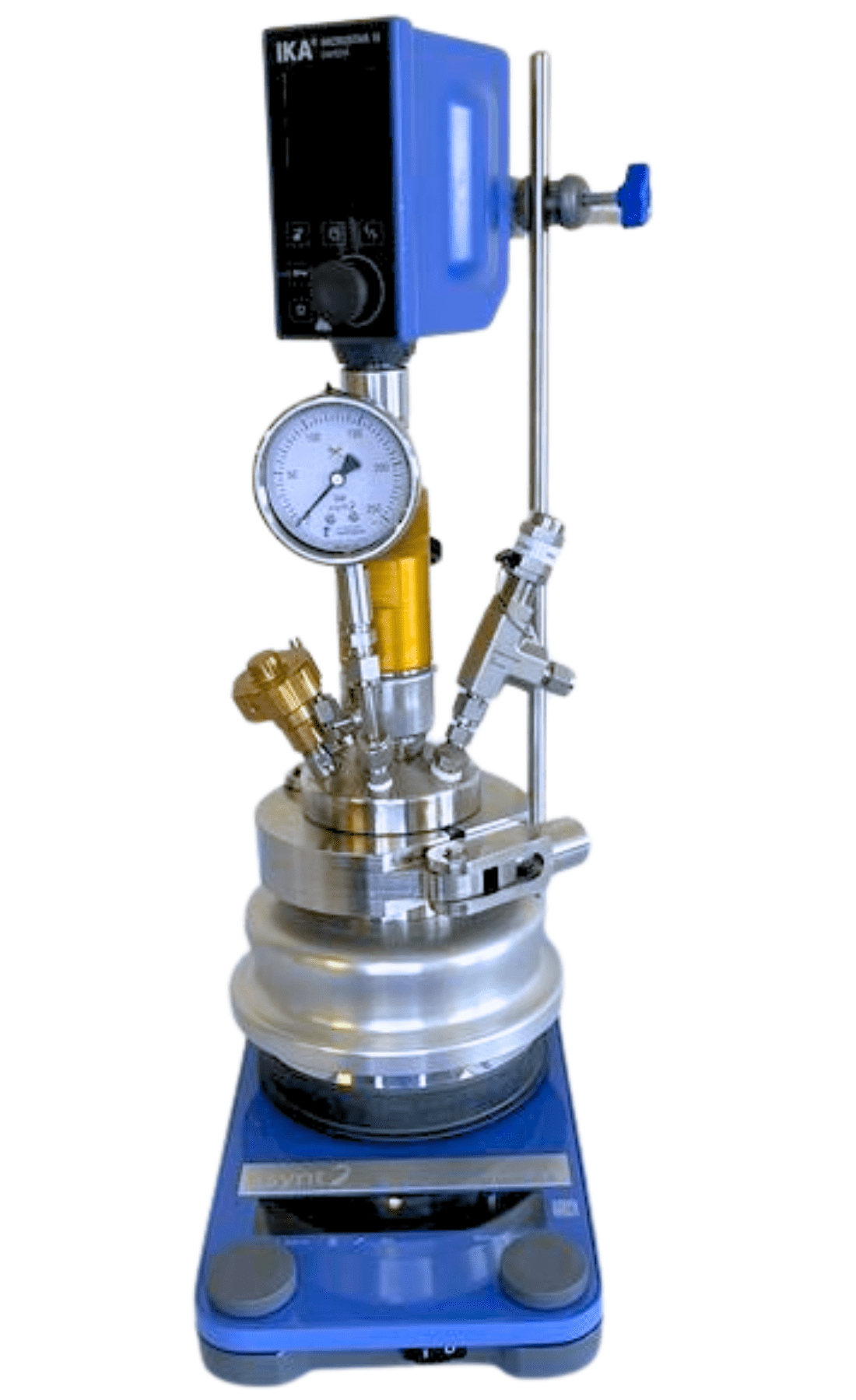
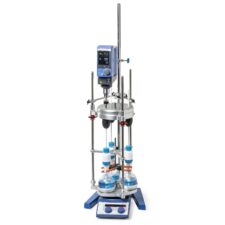
The PressureSyn has options for magnetic and overhead stirring to suit a wide range of applications
Conclusion
Neither magnetic stirring nor overhead stirring is inherently better; the right choice depends entirely on your chemistry. Magnetic stirring excels in straightforward, low-viscosity reactions thanks to its simplicity, compactness and ease of use. Overhead stirring becomes increasingly advantageous as reaction volumes grow, viscosities rise or suspended solids become involved.
If you’d like to learn more about any of the stirring products mentioned in this blog, please get in touch via [email protected], call 01638 781709 or send us a message using the live chat in the bottom right-hand corner of our website. We’d be delighted to help.