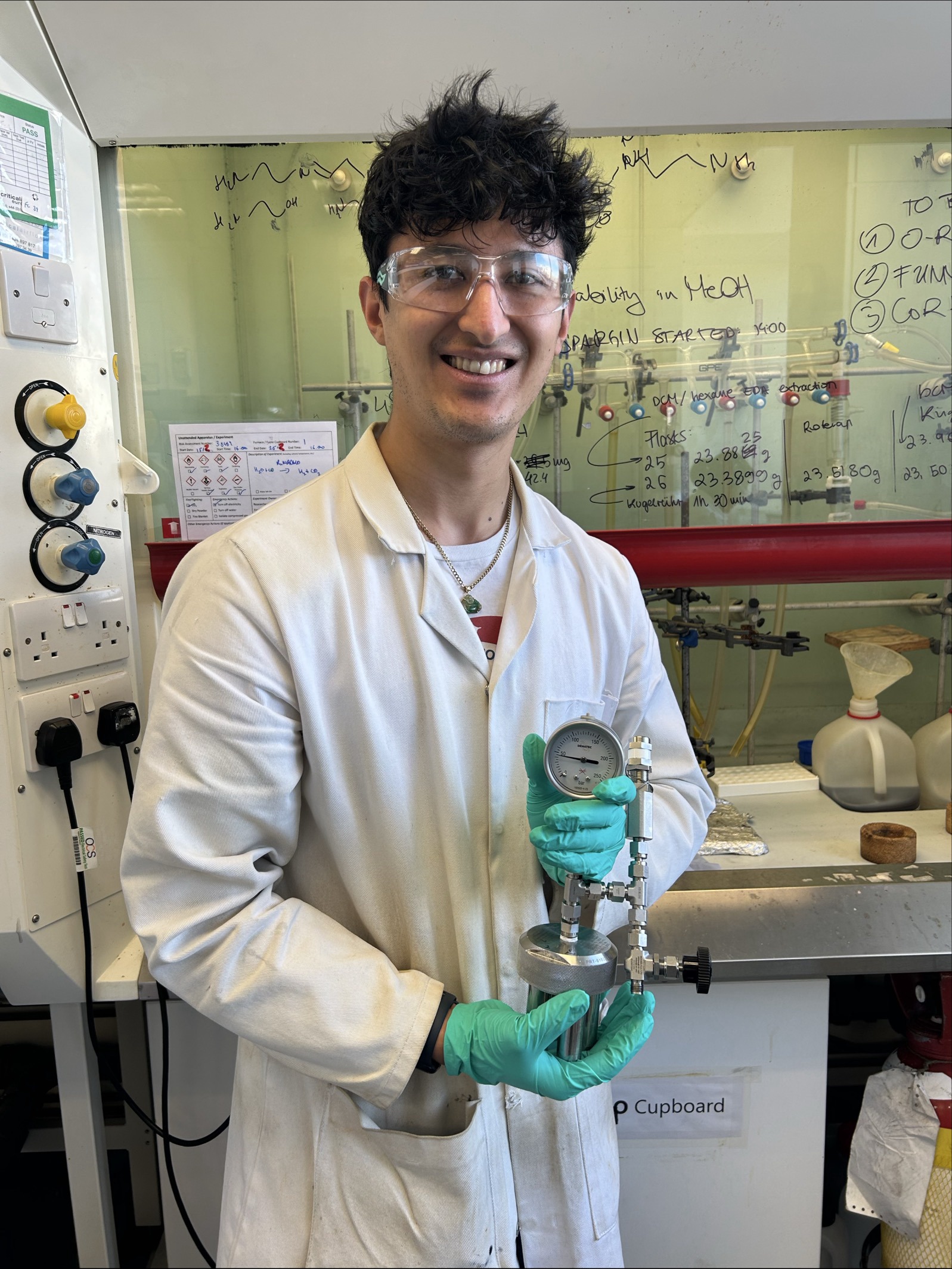
James Luk from the University of St. Andrews has been using Asynt Quadracell parallel high pressure reactor for performing RWGS reactions. Here is his evaluation:
The reverse water-gas shift (RWGS) reaction converts CO₂ and H₂ into CO and water. CO is a cornerstone industrial feedstock used in the production of methanol, acetic acid, phosgene, fuels, and polymers.
Producing CO directly from CO₂ therefore offers a route to transforming captured carbon into some of the world’s most widely used chemicals and materials. However, the RWGS reaction is highly endothermic, industrially requiring temperatures of 600–900 °C resulting in significant selectivity challenges.
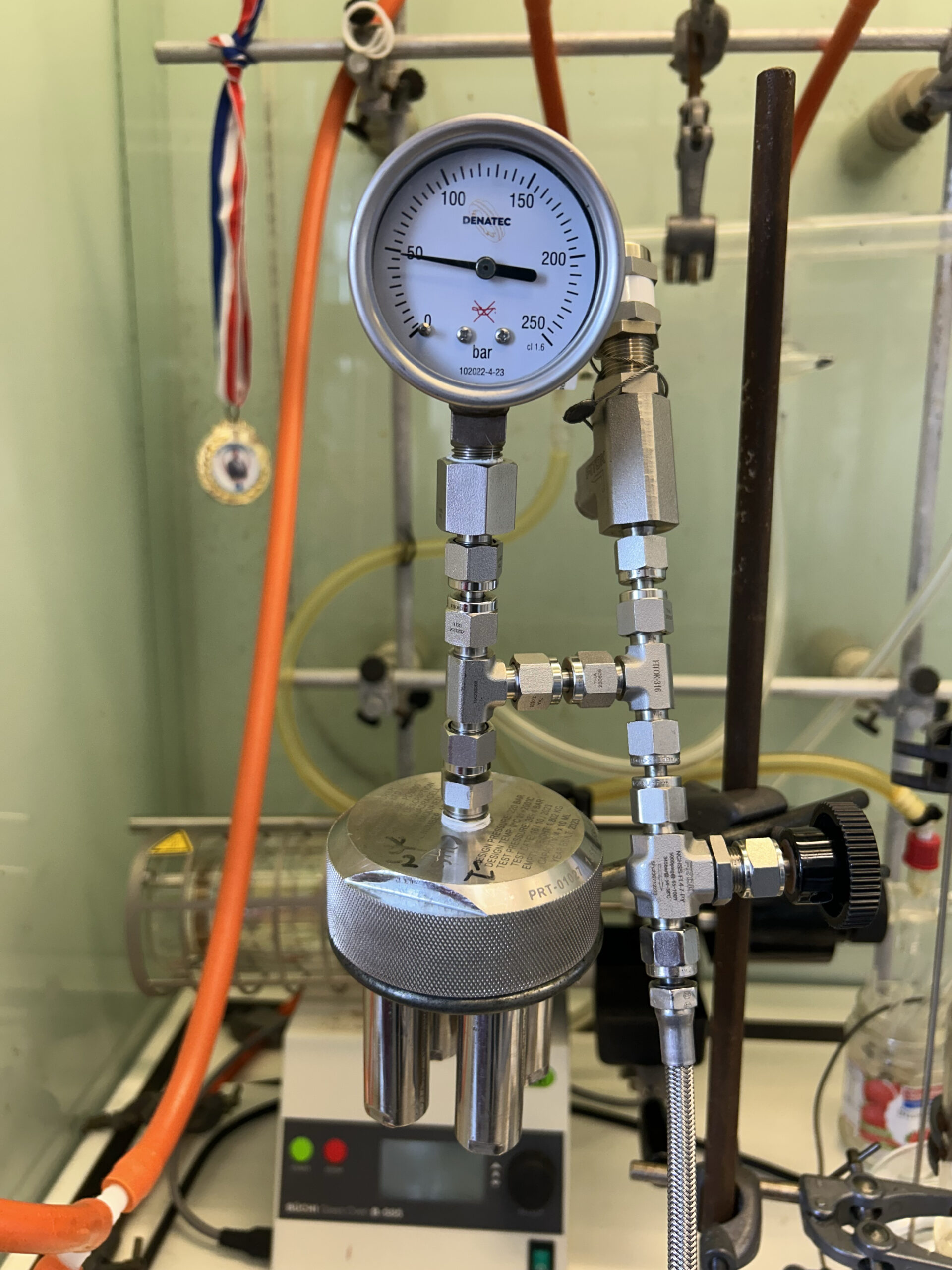
Our catalytic system performs the reaction at much milder temperatures (150 °C), but the competing reverse reaction converts produced CO back into CO₂. We hypothesised that removing water in situ would suppress this. Although molecular sieves can achieve this, they proved incompatible with our catalyst.

We therefore required a system capable of withstanding high pressures (up to 70 bar) while keeping molecular sieves physically separated from the reaction mixture. The Quadracell reactor proved ideal. We filled three of its four chambers with molecular sieves, and the fourth with the reaction mixture to enable selective, low-temperature valorisation of CO₂ to CO.
If you’d like to know more about St. Andrew’s research you can find the full paper here: St. Andrews Quadracell Paper
If you’d like to know more about how Asynt’s range of high pressure reactors can help facilitate your own reactions, please don’t hesitate to get in touch. You can email us at [email protected], call on 01638 781709, or send a message via the live chat in the bottom right hand corner.