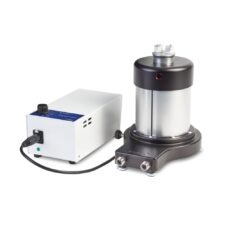
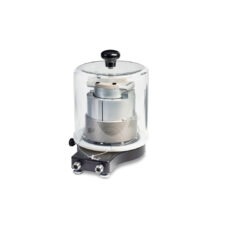
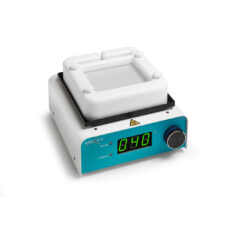
Continuous flow chemistry modules come in a wide range of designs and geometries, with a system often requiring multiple units. By using modular reactors, you can adapt and add to your flow system as your research progresses, allowing you to introduce flow chemistry, mixing for heterogeneous reagents, heating, cooling, and more.

What is Modular Flow Chemistry?
Flow modules are segments of a flow reactor that can be incorporated into a larger flow system or often run independently. Asynt’s continuous flow range features modules for the full flow process, from pumps to sample collection, as well as a wide variety of intermediate reactors. Below, in order of process stage, are some examples of our modules.

Flow Modules Stages:
-
Fluid and Reagent Delivery:
This stage involves pumping and mixing your reagents. This can be achieved with tools such as the Asynt binary pump module, or a syringe pump. -
Reactor:
Reactors come in a wide range of designs and geometries. For example, glass static mixers, tube-in-plate reactors (such as our ColdChip and HotChip), coil reactors (such as our HotCoil and ColdCoil), photoreactor modules (such as our Borealis, PhotoChip, and PhotoSyn), and continuous stirred tank reactors (such as our fReactor and fReactor MAXI). -
Quenching / Additional Stage:
This stage of a flow reaction involves the addition of a reagent to either quench the original reaction or add an extra stage to the process. These would normally be achieved with the addition of a secondary pump. -
Pressure Regulation:
The pressure regulation is provided by a back pressure regulator, which is also something that Asynt supplies. More information here. -
Collection:
The final stage of the flow process is to collect samples. -
Additional Options:
In addition to the above, Asynt also provides the Flow-UV, a solid state spectrophotometer, as well as column reactors compatible with the HotCoil heating module. We also provide a range of other flow chemistry accessories.

Incorporating Modules into Existing Systems:
Another benefit of modular flow is that you can incorporate new modules into your existing system, allowing you to expand your system as your research progresses and your process develops. This allows you to keep research avenues opening with less upfront investment required.

Conclusion:
Modular flow reactors are an excellent way to both build your own continuous flow system or expand your existing lab. If you’d like to know more about any of the equipment mentioned in this blog, please don’t hesitate to get in touch. You can call us on 01638781709, email us at [email protected], or message us via the live chat in the bottom right-hand corner.