Key Evaporator Considerations for High-Boiling Solvents
If you are required to evaporate high-boiling solvents, please read on and find out why our Spiral Evaporator could be just what you need…
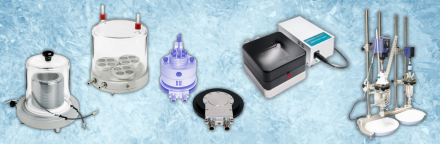
Sub-ambient chemistry has a wide range of applications and, although less frequent than heating, represents no less a crucial area of research. Sub-ambient conditions can include anything from just below room temperature all the way down to cryogenic levels.
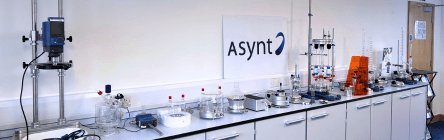
Asynt has had a dedicated demo room for our range of laboratory tools. This allows us to showcase our equipment via video call, webinars, videos, and in-person demonstrations.
Chemistry teaching labs provide an essential introduction to practical chemistry. They often offer students their first experience of working with the kind of equipment they may eventually use in academic or industrial research, experience that can prove invaluable going forwards.
How to set up an electrochemistry series reactor? We look at cell layout and specification, electrode material and accessories for your electroreactor
With St Patrick’s day rolling around for another year, on 17th March we will once again join the Irish in celebrating their national day that many like to adopt no
Flow chemistry and photochemistry are both being increasingly utilised in synthetic chemistry. Flow chemistry allows for safer, more controllable processing and easier scale-up. Photochemistry has opened up novel routes that can be cleaner and more energy-efficient than standard synthesis.
Continuous flow chemistry modules come in a wide range of designs and geometries, with a system often requiring multiple units. By using modular reactors, you can adapt and add to your flow system as your research progresses, allowing you to introduce flow chemistry, mixing for heterogeneous reagents, heating, cooling, and more.
By using overhead stirring across the scale up processes, researchers can gain a better understanding of how their chemistry will scale than if they switched methods as they increased volume, all while avoids many of the draw backs that come with magnetic stirring.
One of the best definitions of sustainable chemistry are the 12 principles of green chemistry. Here’s how Asynt’s product range can help improve these in your lab