Single position high pressure reactors are a useful tool for chemists looking to carry out reactions under high pressures, whether for hydrogenations, carbonations, catalysis, polymerisation, or a range of other pressure chemistry applications. As with any system designed to contain pressure, safety and reliability are absolutely essential.
The Asynt PressureSyn was developed in collaboration with The University of Nottingham to make high pressure chemistry more accessible at benchtop scale, while integrating a series of safety-focused design features.
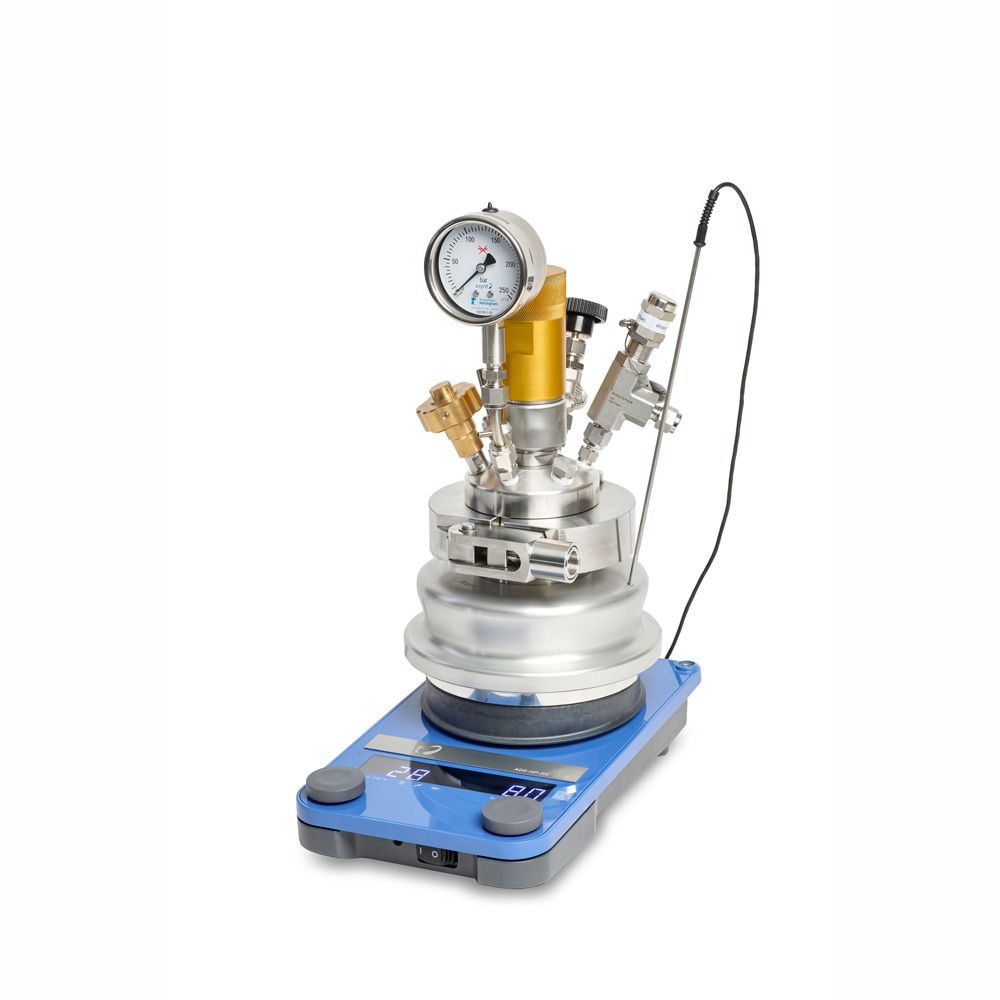
Here are seven key features of the Asynt PressureSyn single position high pressure reactor.
1. A compact 125 mL benchtop vessel
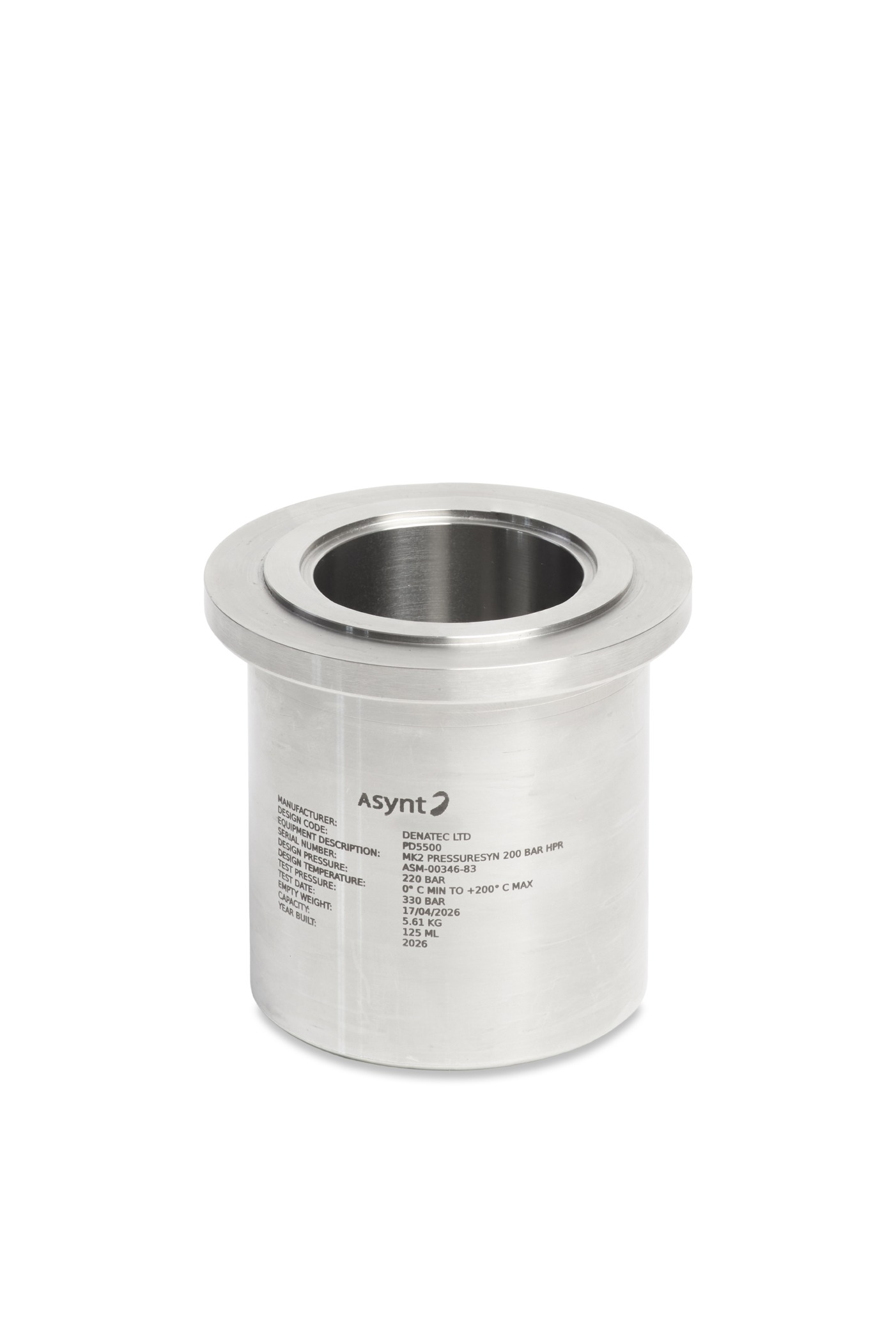
The PressureSyn is designed around a 125 mL vessel volume, making it well suited to benchtop laboratory work where users need meaningful reaction capacity without moving to a large floor-standing pressure reactor system. This makes it a practical option for development work, screening, teaching, and small-scale high pressure synthesis.
Its single position format also helps keep operation straightforward. Rather than managing multiple vessels at once, users can focus on one reaction setup, one pressure profile, and one clearly defined experimental run.
2. Operation up to 200 bar and 200 °C
The PressureSyn is rated for a maximum working pressure of 200 bar and a maximum working temperature of 200 °C, offering strong capability for a wide range of pressure chemistry applications. This combination of pressure and temperature performance gives researchers flexibility while retaining a compact, laboratory-friendly format.
For many chemists, this is the balance they need: enough performance for demanding chemistry, but in a format that remains accessible for routine laboratory use.
3. Unique safety key and locking clamp mechanism
One of the most distinctive features of the PressureSyn is its unique safety key and locking clamp mechanism. The system is designed so that the vessel cover cannot be removed while pressure remains inside the reactor.
Each safety key and clamp are unique, meaning the clamp cannot simply be opened with a spare key from another unit. This is an important detail, as it helps ensure that the safety system is not bypassed casually or accidentally.
4. Built-in residual pressure release
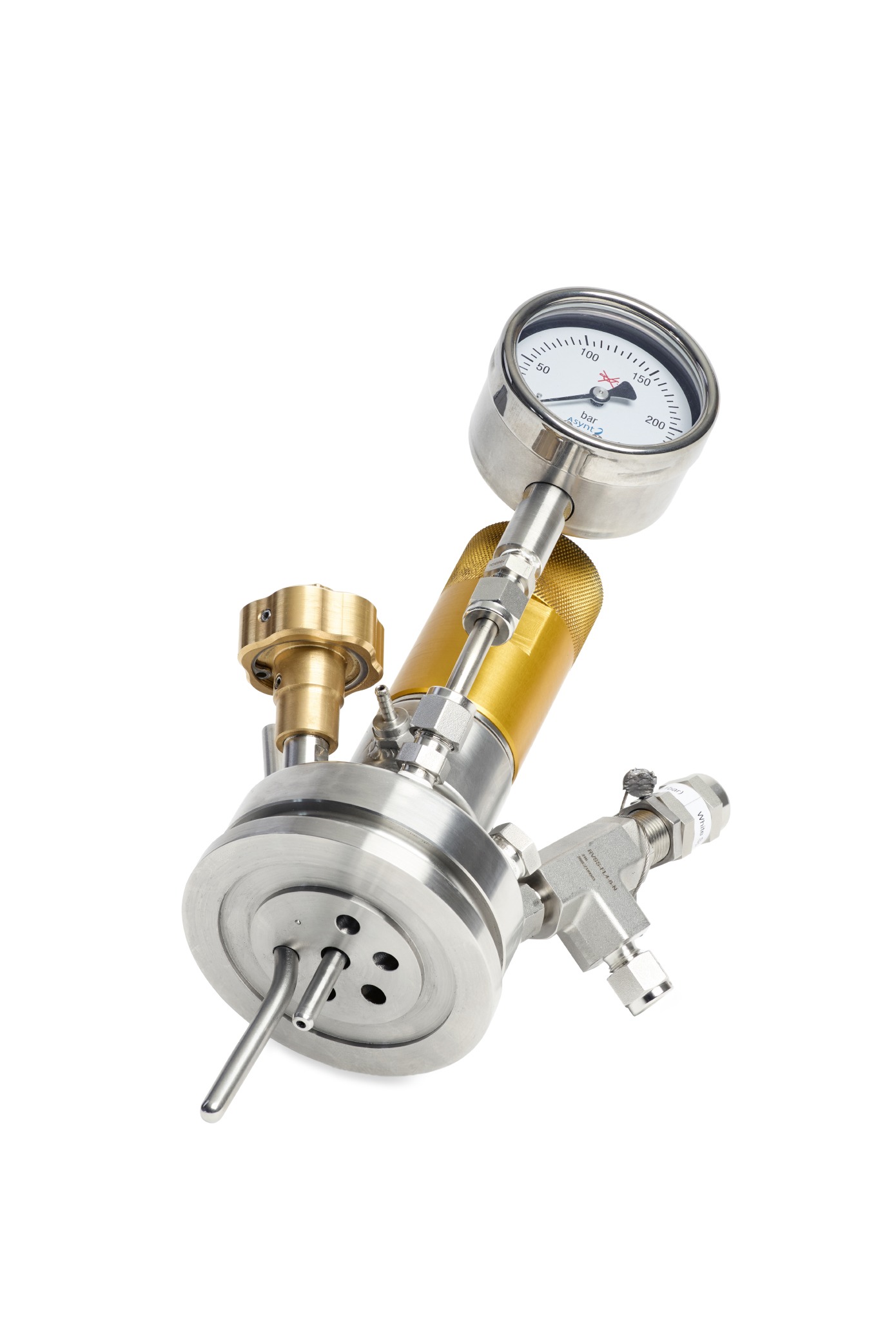
The PressureSyn also includes a pressure relief needle valve with a built-in key. Before the locking clasp can be opened, any residual pressure must be released.
This matters because residual pressure can easily be overlooked, particularly at the end of a run when the system may appear dormant. By making pressure release part of the unlocking sequence, the PressureSyn helps build safer operation into the physical design of the reactor, rather than relying solely on user memory or written procedure.
5. Double pressure relief system
The PressureSyn features a pressure relief valve as standard, with an optional bursting disk available as an additional safety measure. This double pressure relief approach provides layered protection for high pressure work.
The optional bursting disk can also be submitted for testing to ensure safe operation, and spare disks are available so that laboratories can keep working while testing is carried out. For busy labs, that practical detail can make routine safety checks easier to manage.
6. Heating and stirring on a standard hotplate
The PressureSyn is designed to work with a standard magnetic hotplate stirrer, with heating up to 200 °C. Agitation can be provided via a magnetic stirring bar, allowing the reactor to integrate into common laboratory workflows without requiring a dedicated standalone heating and stirring platform.
For improved stability and heat transfer, the PressureSyn can be used with a specially designed DrySyn adapter base plate. This allows secure placement on the hotplate stirrer and supports more efficient temperature transfer during operation.
7. Flexible configuration options
While the PressureSyn is designed to be straightforward, it is not inflexible. The reactor includes a gas inlet/outlet valve with compression fitting for attachment to steel pressure tubing, as well as an additional spare 1/8″ NPT port for customer attachments.
Users can also choose optional fittings for overhead stirring, providing an alternative to magnetic flea stirring where required. Optional accessories such as a digital thermometer, extension cable, spare O-rings, compression fittings, and reaction vial inserts (pictured below).

The PressureSyn is designed, manufactured, and tested in the UK from 316 stainless steel. For laboratories carrying out high pressure chemistry, it offers a compact single position reactor with a strong emphasis on safe, practical, and accessible operation.
Conclusion:
If you’d like to know more about any of the Asynt PressureSyn don’t hesitate to get in touch via [email protected], or the live chat in the bottom righthand corner. We’ll be happy to answer any questions you have!