Flow chemistry and photochemistry are both growing areas of research. Both processes opening novel synthetic routes. While they are both exciting fields individually, they also can be combined for a range of benefits, with their parameters often being complementary.
Chemical reactions are generally activated by heat and / or a reagent. With recent advancements in laboratory equipment, it is now easier to work with previously lesser used methods such as electrochemistry and photochemistry. These techniques are sometimes referred to as reagentless or traceless chemistry.
This means that photochemistry can help reduce the need for consumables, while reducing the number of reaction steps. So where does flow come in?
One of the key ways in which flow can benefit photochemistry is the high level of irradiation permitted by capillaries, glass static mixers and, to a lesser extent, CSTRs. This is because the narrow diameter of the channels allows a high level of light to reach into the reaction. With a batch reaction, only a thin layer of the reactant is exposed to the light at any given time. This means that any batch photoreactor will require efficient mixing or be limited to a smaller volume.

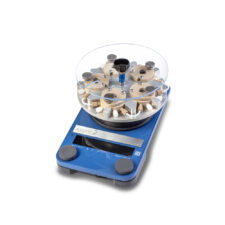
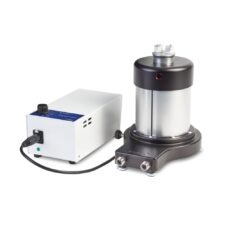
The fReactor with PhotoFLOW and Borealis allow for photocatalysis in CSTRs and capillaries respectively
Other benefits of flow photochemistry:
- Improved reaction scalability – Increasing light power enables more photons, increasing reaction rates and increasing throughput.
- Improved reaction selectivity – Single wavelength LED light sources enable selectivity of reaction pathways.
- Improved reproducibility – Controlled reaction exposure times with no over irradiation.
- Improved mixing and heat exchange – Flow offers reproducible mixing and precise temperature control.
- Ability to perform multiphase chemistry – Small reactor design allows ability to use gases, crucial in photochemical applications.
- Increased Safety – Light proof reactors and power interlocks preventing exposure of the user to high intensity light.
Tools for Flow-Photochemistry:
- fReactor with PhotoFLOW – our entry level flow-photo system featuring a series of five CSTRs (continuous stirred tank reactors), each of which has the option of an additional photo module
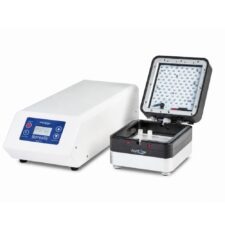
- PhotoChip – the PhotoChip allows for precise temperature control and irradiation of a glass static mixer chip or glass tube and plate reactor
- Borealis – the Borealis is a coil reactor, with its capillary surrounding an LED array. The capillary itself is situated in a column for temperature control
- PhotoSyn – a larger and more powerful LED array, like the Borealis it is also designed to work in tandem with a coil reactor.

The PhotoSyn is our mot powerful flow-photoreactor, with power up to 700 W and operation on multi-litre scales
Sustainability:
Flow-Photochemistry is an ideal method for improving your lab’s sustainability. This is achieved via several means. Firstly, photocatalysis reduces the need for large volumes of more typical catalysts that often contain rare metals such as platinum, saving on cost as well as environmental impact.
Continuous flow also allows you to maximise your atom economy, reducing waste and making your overall process more energy efficient.
Safety:
Safety is critical with photochemistry given the intensity and often narrow bandwidth of the light involved. Our photoreactors are designed to shut off as soon as the LED is removed, preventing the user being accidentally exposed.
Flow also has the added safety benefit of the smaller volume of reactant being used at any one time compared to an equivalent batch reaction. This means that if there are any accidents the amount of reactant lost will be much lower.

The PhotoChip combines high powered LED irradiation with glass static mixers or tube and plate reactors
Conclusion:
Photo-Flow chemistry opens new pathways for research, while also allowing for improvements in both sustainability and safety in your lab. All while providing an excellent opportunity for scale up and process development.
If you’d like to know more about any of the lab tools mentioned in this blog, please don’t hesitate to get in touch. You can email [email protected], call 01638 781709 or send us a message via the live chat in the bottom right-hand corner. We’ll be happy to answer any questions you may have!