Unlocking the Power of Flow Chemistry Using CSTRs
At the heart of the Flow Chemistry revolution are advanced instruments like the continuous stirred tank reactor (CSTR). Want to know more about them?

A waterless air condenser is a condenser that uses the shape of the glassware to induce condensation. The heat is then carried away by air convection
Biocatalysis is becoming an increasingly important tool for chemists looking to develop efficient and selective chemical processes. But what happens when your biocatalyst is a solid, and what equipment can you use to get the most out of it?
This inaugural edition of Asynt Research Highlights celebrates the work of Omar Mohammad and colleagues at Aston University, who systematically modernised the classical Kolbe–Schmitt reaction for contemporary carbon utilisation research.
Asynt has collaborated with Almac Sciences, a leading specialist in API development and manufacturing, to design and supply a range of bespoke reactor vessels.
Mixing is crucial to a huge range of chemical processes. Across this range, different applications require different equipment. Magnetic stirring and overhead stirring are two of the most prominent solutions, and each is suited to different types of process.
Continually evolving to improve our environmental impact, while we help you improve yours in your lab.
Find out how the team use their fReactor, and how their chemistry benefits…
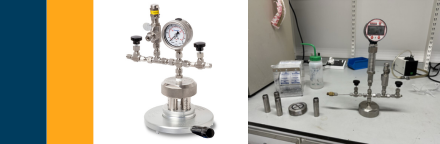
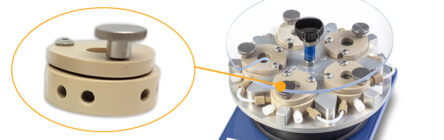
Aston Univeristy Use Asynt Quadracell High Pressure Reactor for Research Into Salicylic Acid Production
Modular coil reactor heaters can be thought of as the flow chemistry equivalent of the magnetic stirrer hotplate. With the correct coil reactor it provides precise heating over the full length of the flow reactors volume, through which your homogeneous reactants are pumped.