Batch and flow represent two crucial, but disparate, chemical processes. Each has its own set of benefits depending on the requirements of your laboratory. In this blog I’ll run through some of the differences between them, and advantages of each, and highlight some of their shared strengths.
What are flow and batch?
Flow chemistry is continuous, whereas batch chemistry deals with a set volume at a time. This means that the overall volume of a flow process’s output is only limited by the time allocated for the process. Whereas a batch reaction is limited by the volume of the vessel the reaction takes place in.
Benefits of batch chemistry:
- Batch reactions are, generally, easier to set up than flow chemistry reactions.
- Great options for multiple parallel reactions
- Tends to be less expensive than flow at any given scale
- Better for working with solids

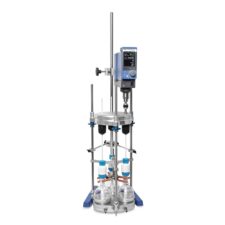
Our Datum and Atom jacketed reactor systems – both batch reactors
Benefits of flow chemistry:
- Continuous flow allows for automation and excellent homogeneity
- Smaller volume of reaction at any one time, improving safety
- Fantastic for photochemistry, especially when using capillaries, as the narrow width allows for excellent irradiation
- Great for scaling up your reaction. Metrics change less with increased volume, and you can always just leave it running for longer

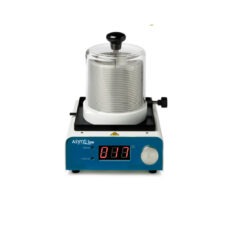
Our fReactor CSTR flow chemistry platform and HotCoil coil reactor heater
Areas they are both strong:
- Mixing – flow is excellent for homogenous chemistry, while there are a range of effective tools for mixing batch reactions including overhead stirrers and magnetic stirrer hotplates
- Precise temperature control – both flow and batch reactions have option for heating via recirculators. In the case of batch reactions hotplates are once again a great tool, and our HotCoil flow reactor can be described as the flow equivalent of a magnetic stirrer hotplate
- Photochemistry – there are a wide range of photoreactors both flow and batch, offering their own unique benefits. For example, our Lighthouse batch reactor carries light directly into the reaction via a quartz rod. This maximises efficiency and surface area exposed to the light
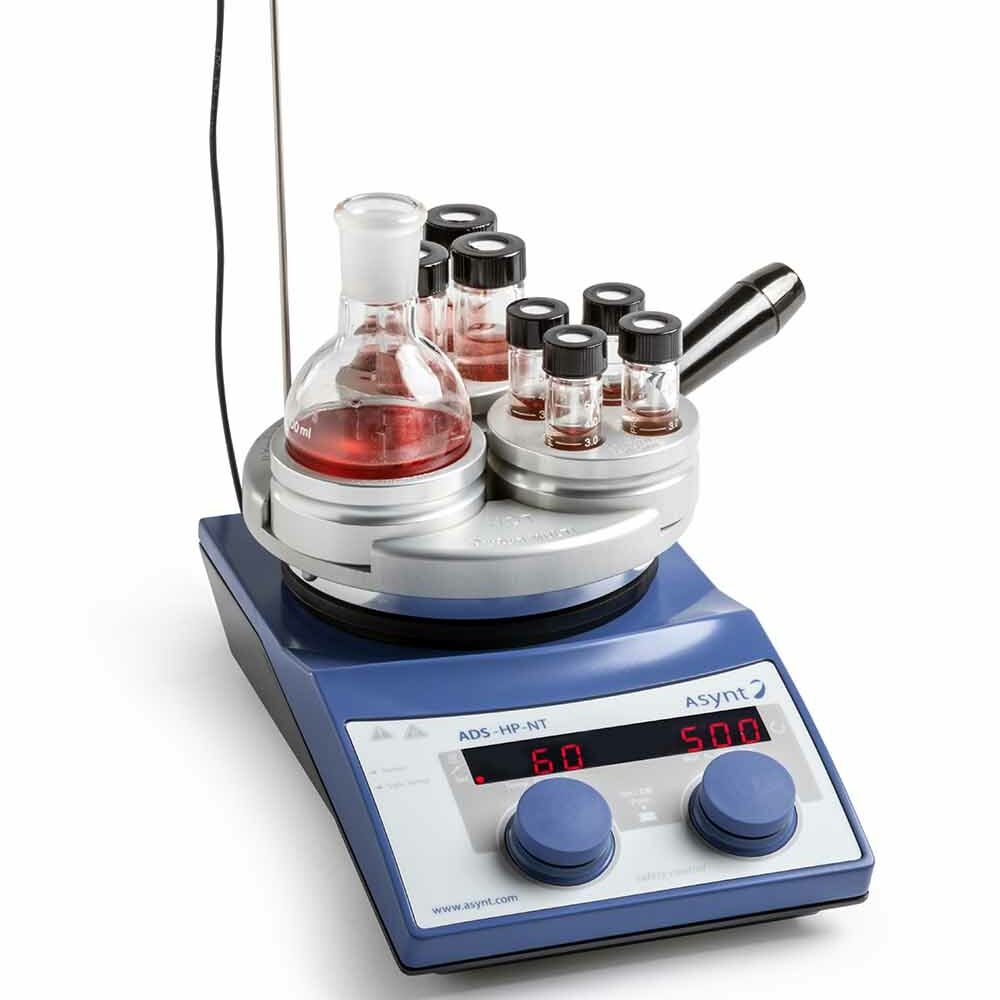
Our DrySyn multi allows for running reaction vial and round bottom flasks in parallel, all on a single magnetic stirrer hotplate
Asynt tools:
We have a selection of batch and flow tools to accommodate a range of scale, as well as fields such as photochemistry (in the case of both) and electrochemistry for batch. Examples include:
Batch:
- DrySyn blocks for vials and round bottom flasks, scaling all the way from NMR tubes to 5 litre flasks
- Our ReactoMate jacketed reactor systems – from volumes of 50 mL to 50 L and more.
- Lighthouse and Illumin8 – single and parallel photoreactors respectively
- Our ElectroReact, six position parallel electrosynthesis platform
Flow:
- Our fReactor is a series, continuous stirred tank reactor with five modules. Although you can run fewer modules or link multiple reactors if preferred.
- HotCoil and ColdCoil – these allow for precise temperature control of a coil reactor
- Borealis – an LED array within a temperature-controlled coil reactor
- Glass static mixers for excellent mixing and ideal for photochemistry

Our automated FlowLab flow chemistry platform
Conclusion:
Both batch and flow chemistry can provide excellent avenues for your research and there are a wide range of innovative tools available for both. If you’d like to know more about which one of these processes would best suit your own research, don’t hesitate to get in touch. Our team will be happy to help find a solution that works best for your lab!